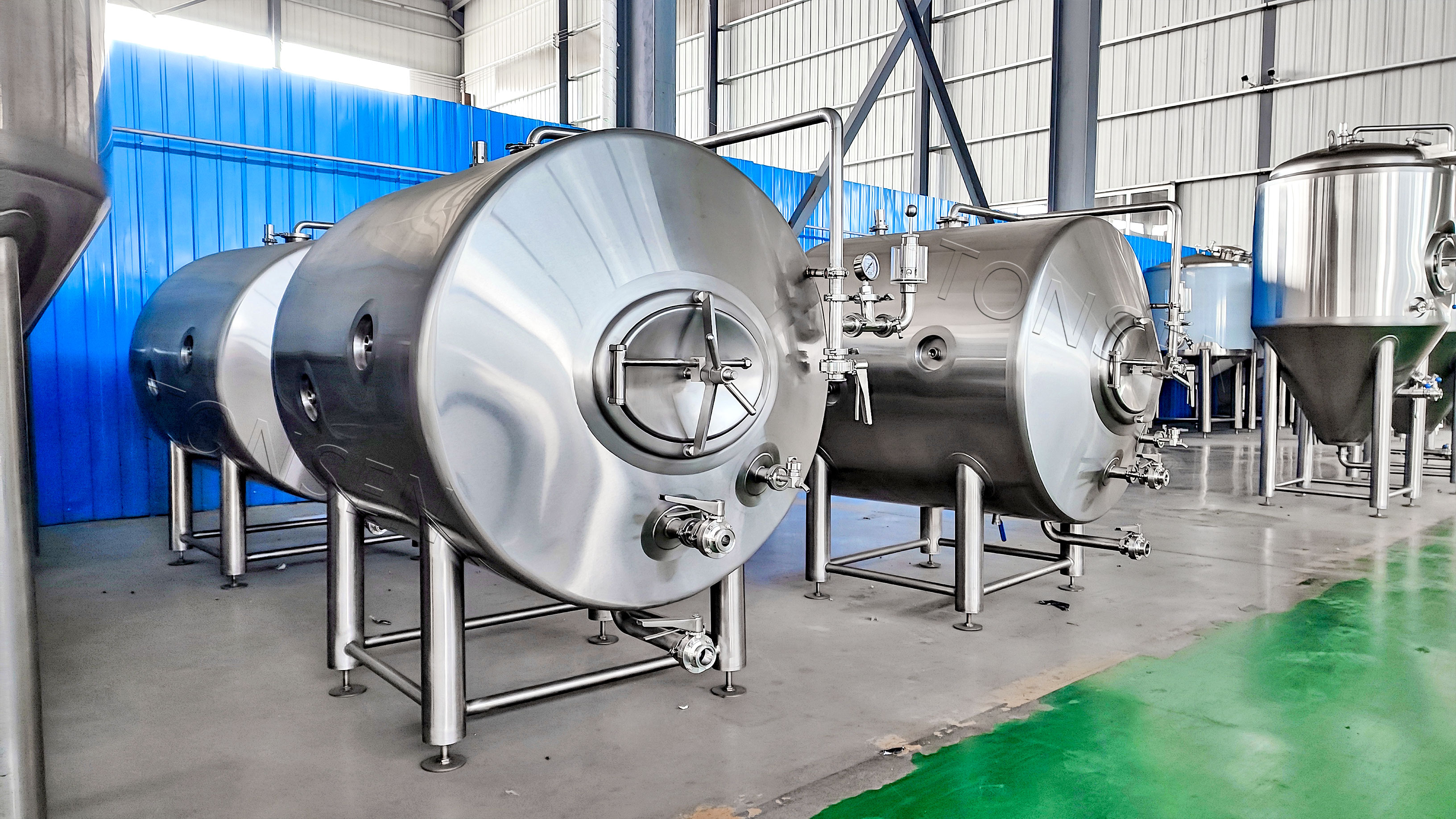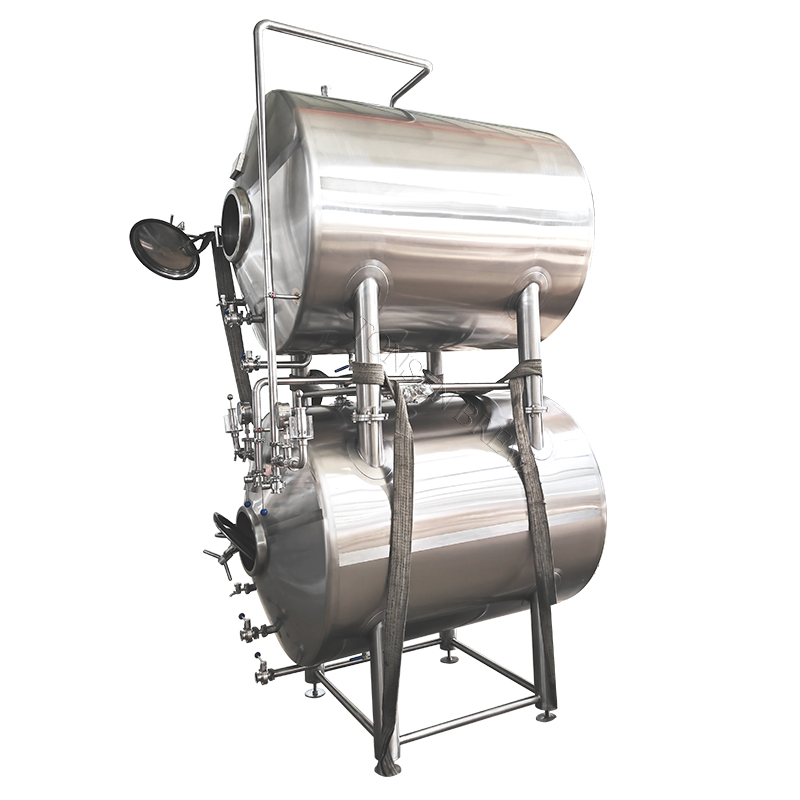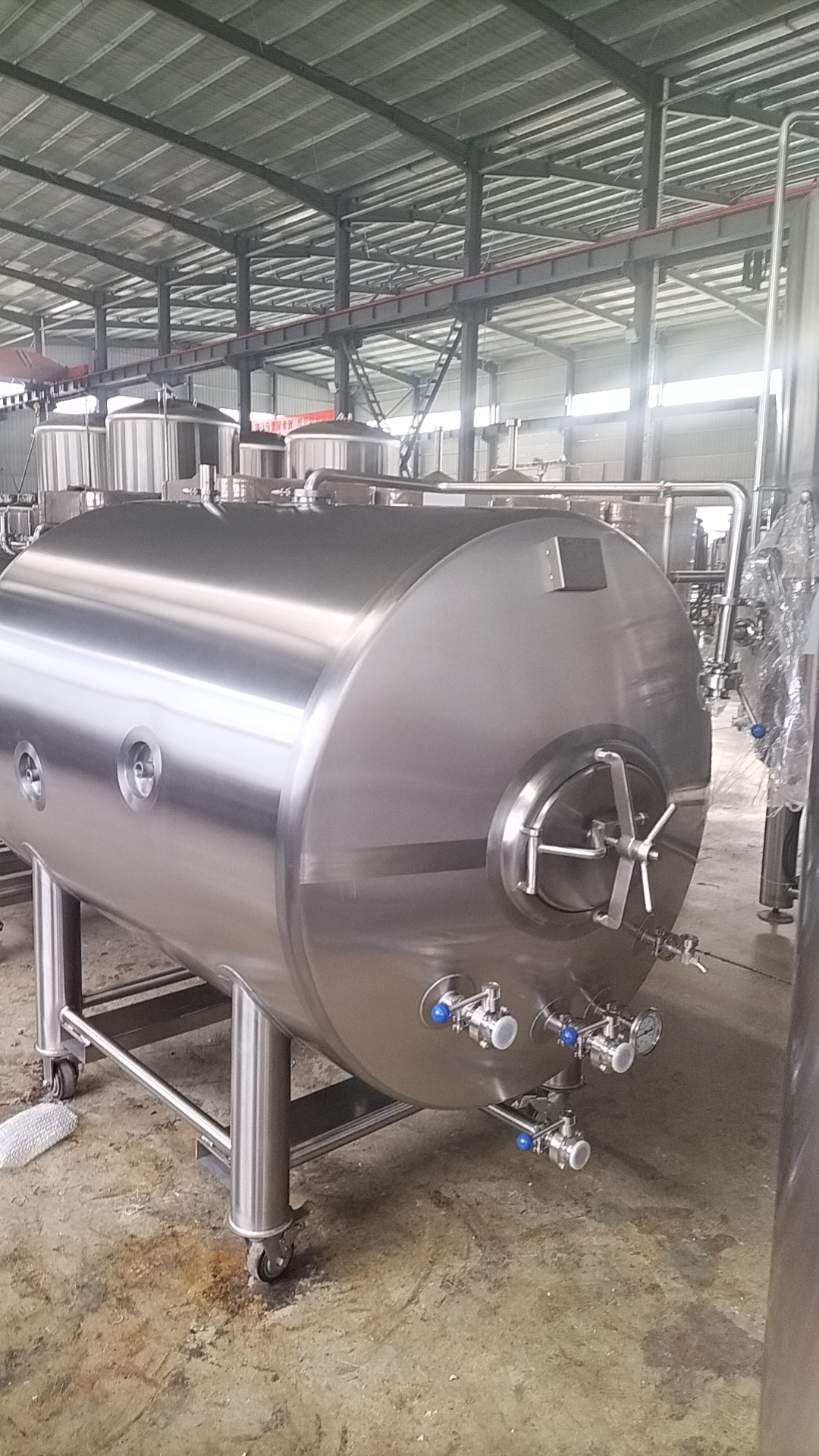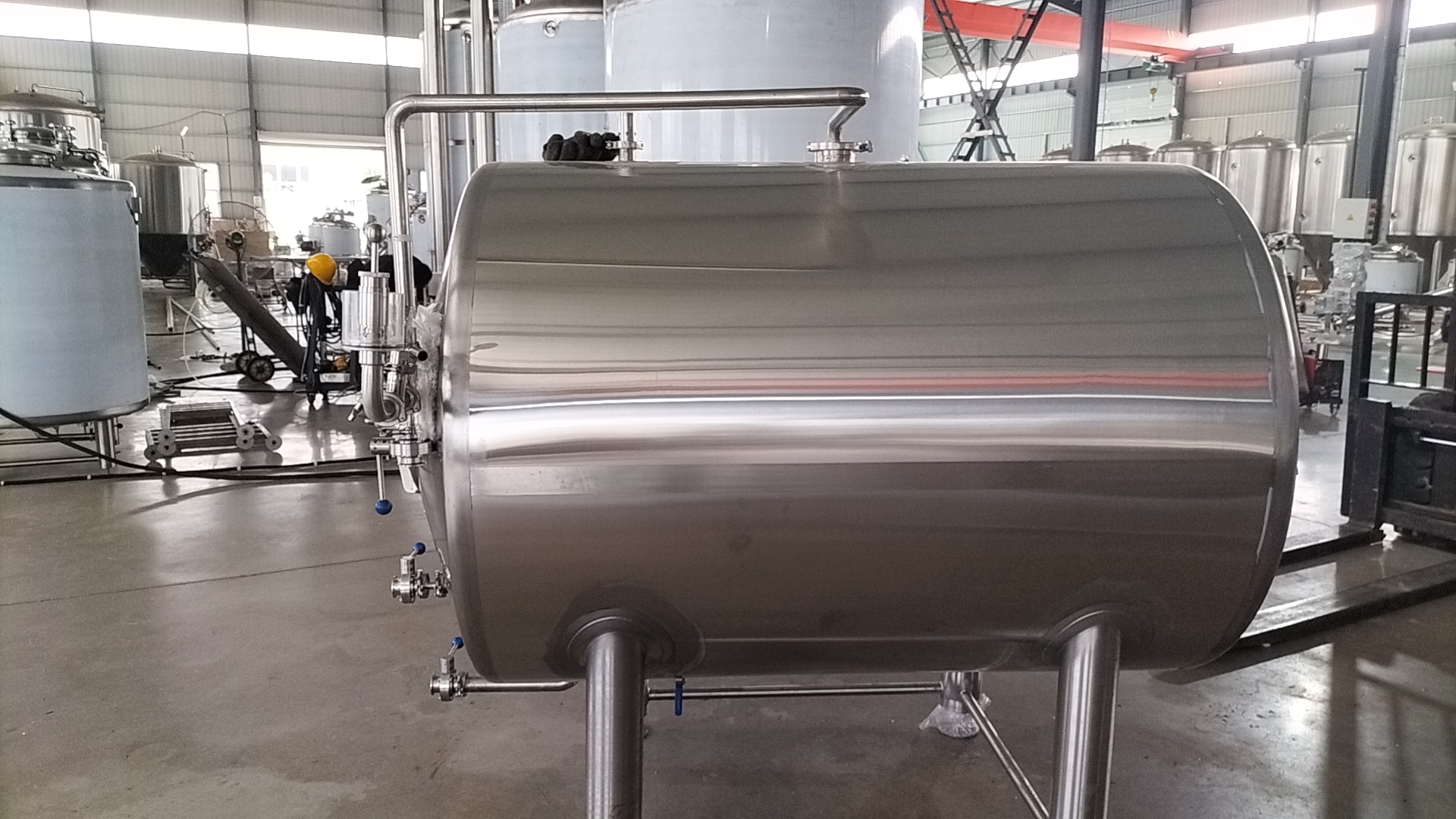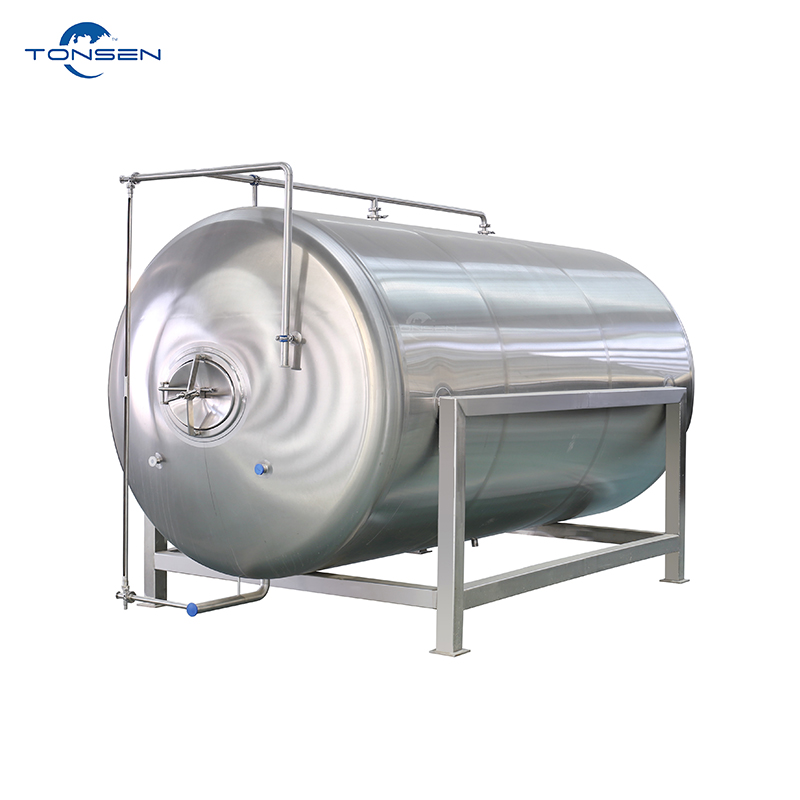
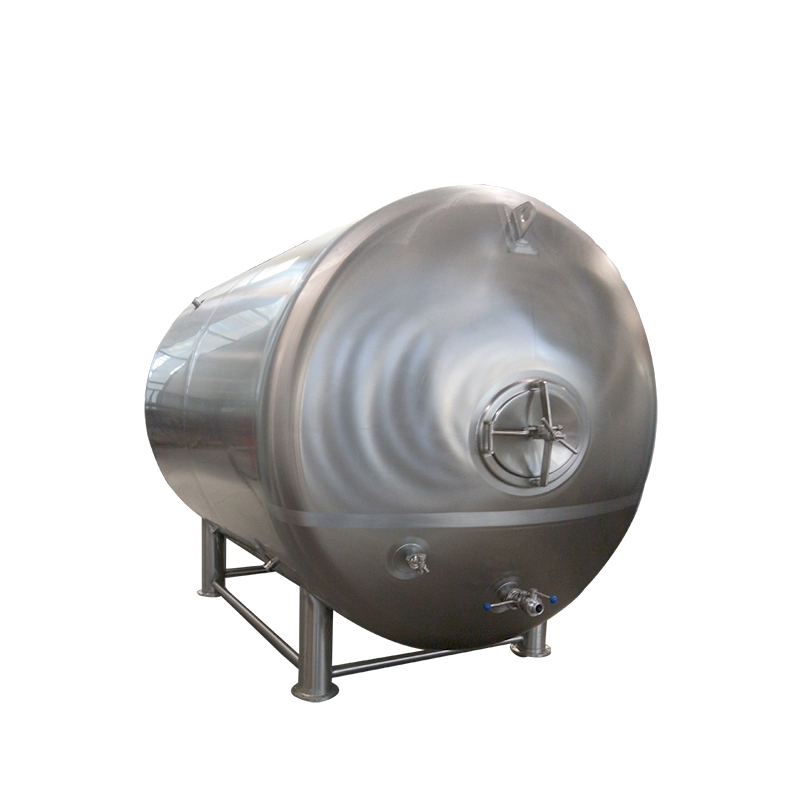
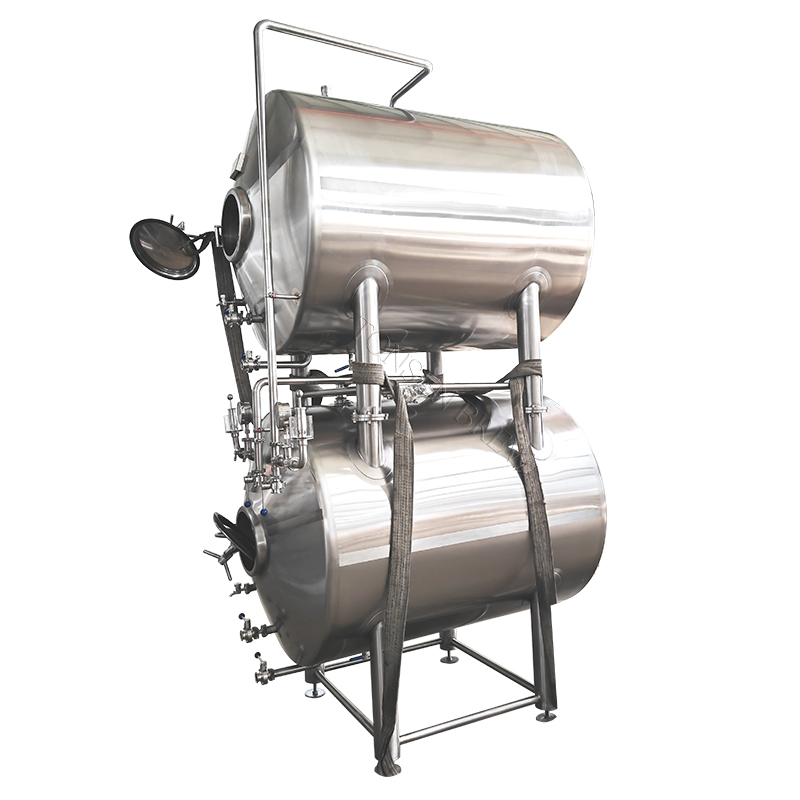
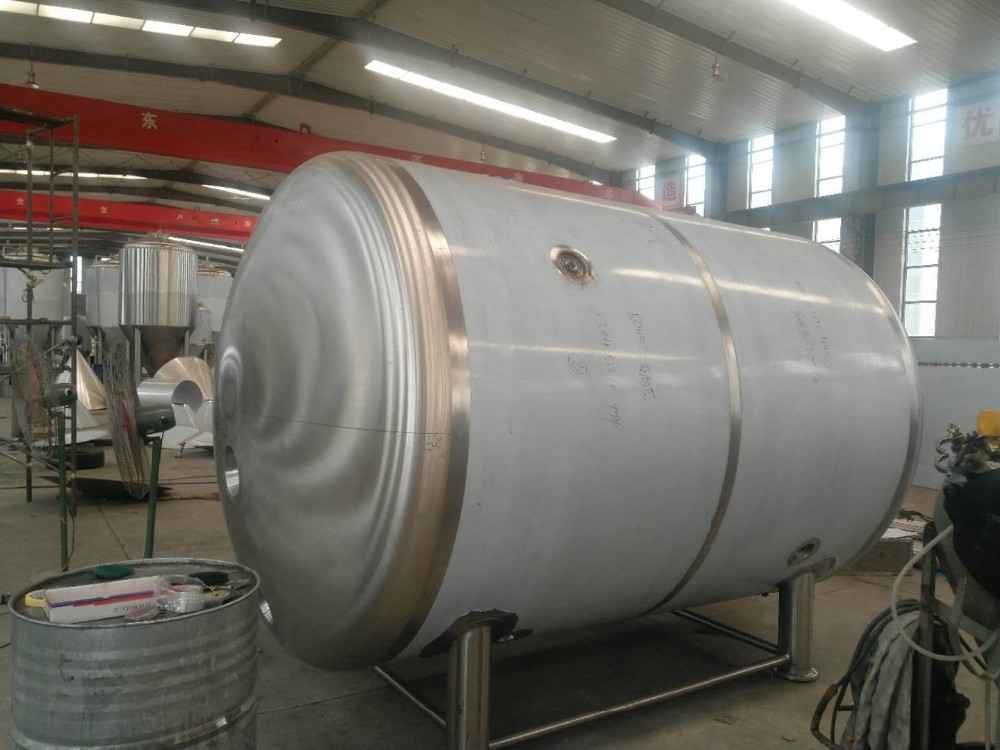
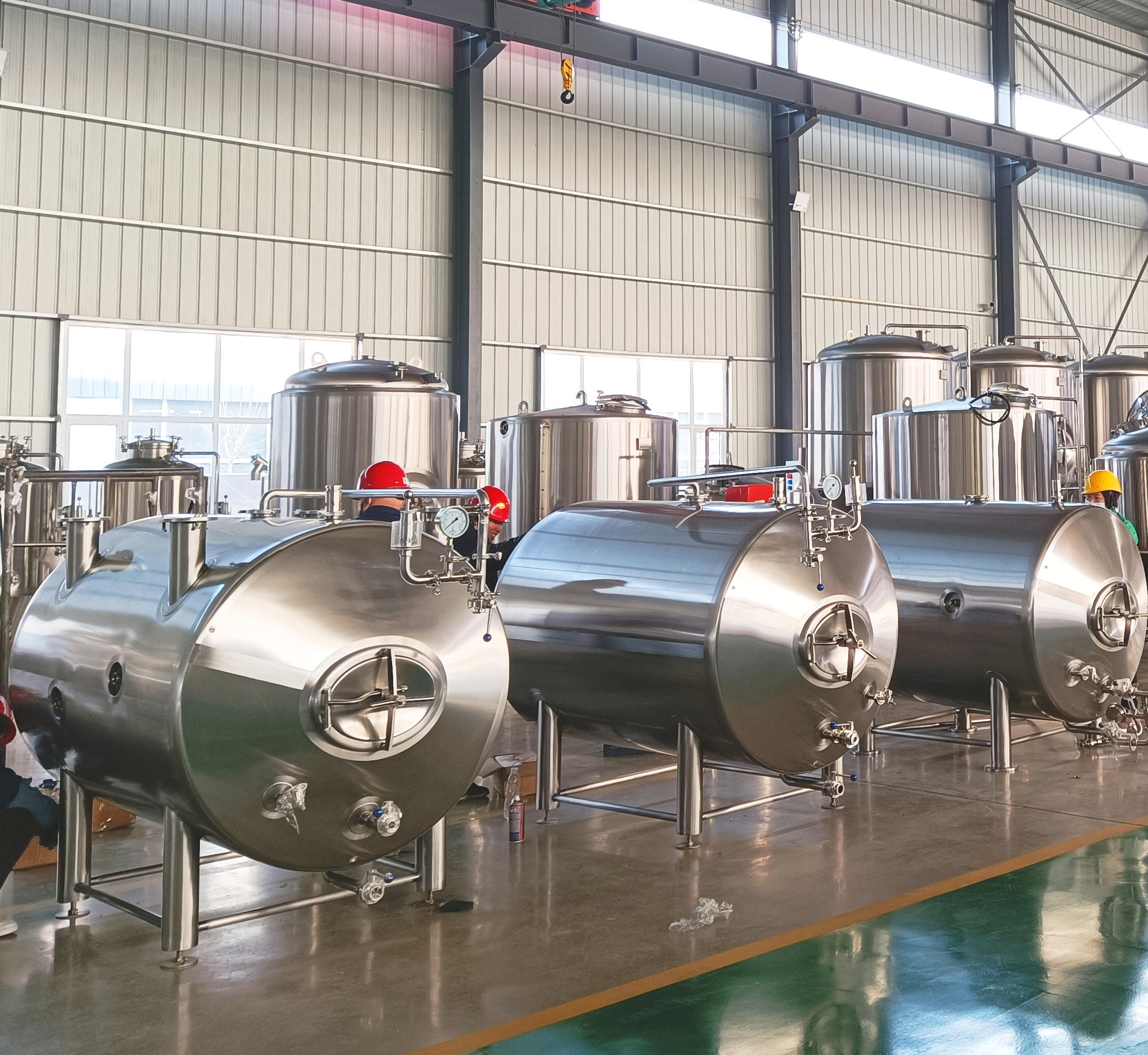
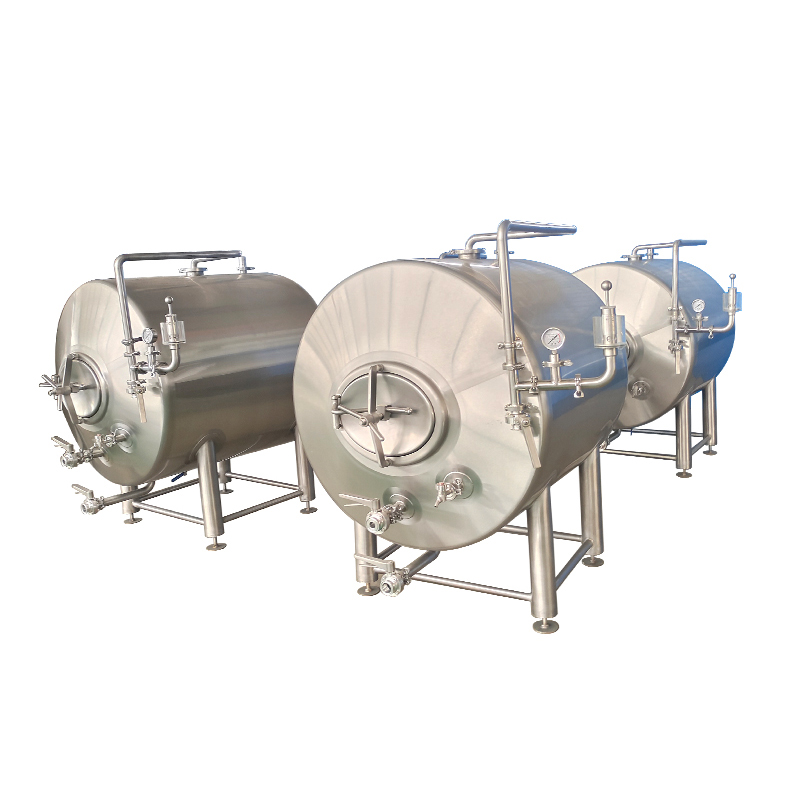
Horizontal bright tanks are used in the brewing process, typically for conditioning beer after fermentation. Unlike the traditional vertical tanks, horizontal bright tanks are positioned horizontally, which allows them to provide better space utilization in certain brewery setups. These tanks are essential for beer maturation and carbonation, as they help in settling the beer and clarifying it before it’s packaged.
Here are some of the key features of horizontal bright tanks:
Space Efficiency: Horizontal positioning can save space in breweries, especially those with limited vertical height or where horizontal space is more available.
Beer Clarification: The horizontal design helps in gravity-driven sedimentation, allowing yeast and other particulates to settle at the bottom more efficiently.
Carbonation Control: These tanks are often equipped with a carbonation stone to infuse CO2 into the beer, helping it reach the desired level of carbonation.
Temperature Control: They typically come with a jacketed design for temperature control, which is critical for achieving optimal conditioning.
Packaging: Once the beer has been clarified and carbonated, it’s ready for packaging into bottles, cans, or kegs.
Do you use horizontal bright tanks in your brewing process, or are you considering adding one?
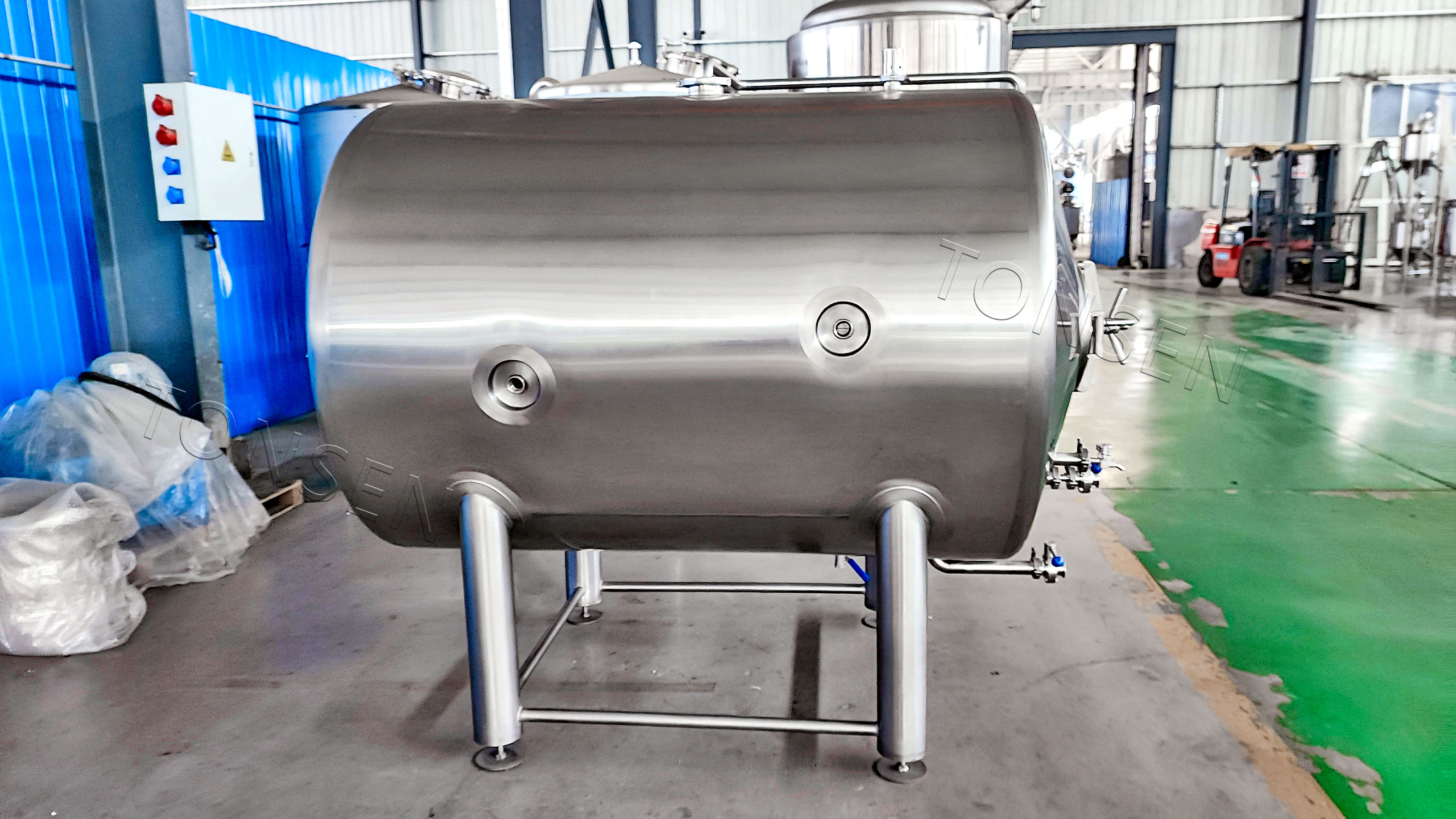
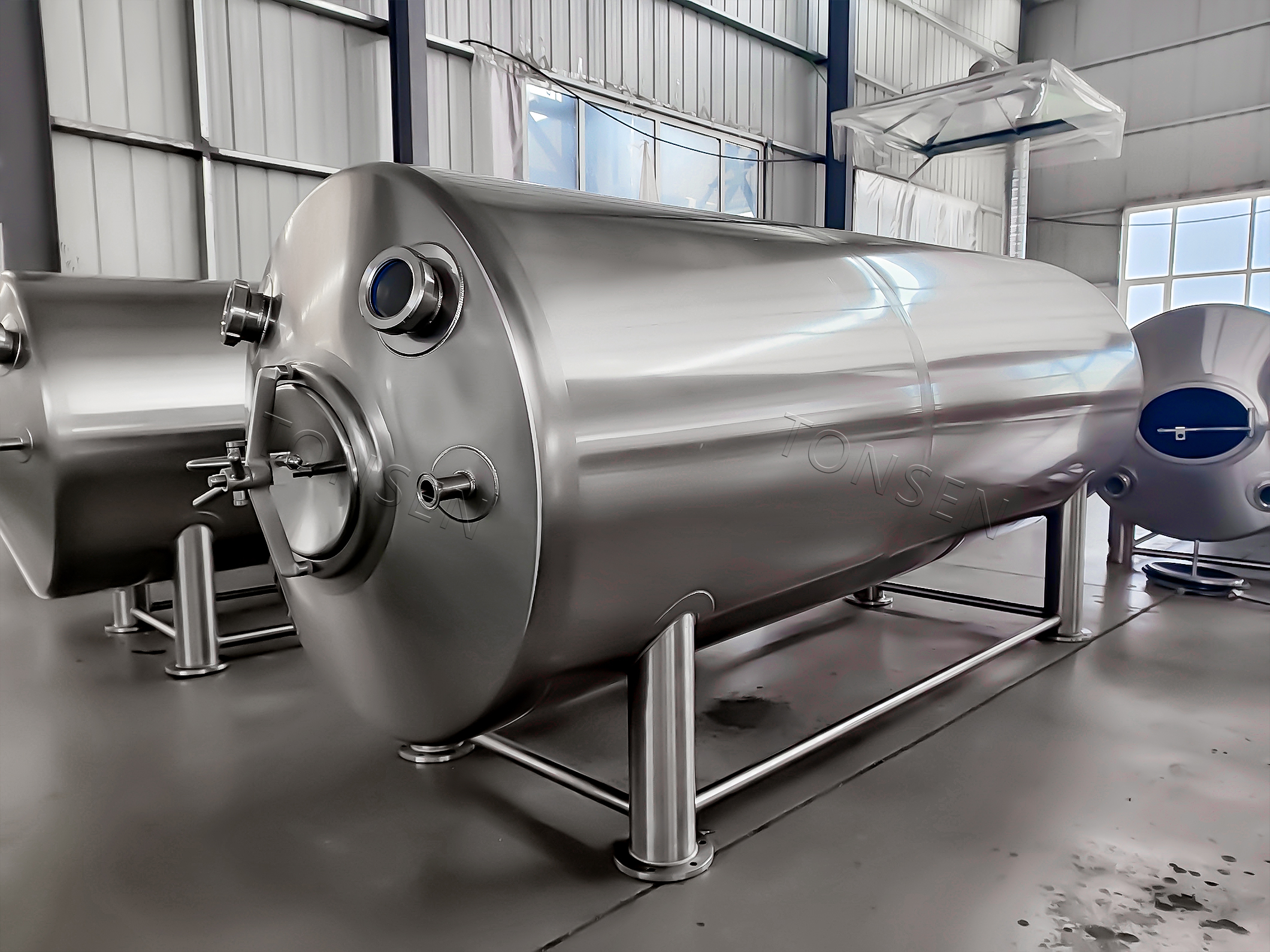
The main technical parameters:
Tank system: rotating shaft tpye horizontal tank. Material SUS316L or SUS304, polished inside and outside; designed working pressure at normal pressure, inner sleeve heat transfer, large inoculation port; with outer jacket, special safety ventilation, exhaust and sampling ports. The loading factor is 40%-60%.
Stirrung system: mechanical stirring, double propeller blades; speed control: 0~rated speed±1rpm
( German SEW motor and reducer. It can be clocked forward and reverse rotation, 0-99min adjustable).
Temperature control: (cooling water +5℃)-65.0℃±0.2℃ (Pt-100 temperature electrode imported form Germany, fuzzy PID intelligent controller).
Humidity control: one-stage decompression filtration, two-stage pre-filtration; sterilization filter adopts imported filter element, steam filter; humidity control range: 30%~100% (automatically adjusted by water spray system. Water can also be added manually).
Water replenishment time: open 0-99 minutes or seconds; off 0-99 minutes or seconds.
Ventilation flow: 0~1VVM (rotor flowmeter. 0.2 μm sterile air filter).
Tank pressure: 0-0.3Mpa (pressure gauge indication, manual adjustment).
In-place inoculation and mixing: In-place pressure difference or flame uniform inoculation, in the precess of biochemical reaction, use the material mixing and crushing system in the tank to achieve unifrom and stable fermentation.
Sterilization method: external steam, manual control (the medium material in the fermenter tank is directly passed into steam, assisted by a special stirring system, to achieve high -temperature sterilization in place. Compared with turntable and tillage solid biochemical reaction systems, Eliminating the need for a large number of auxiliary equimpment such as a solid material steaming pot, an aseptic material conveying system. The cooling adopts a combination of vacuum and ventilation, while adjusting the moisture content of the sterilized material).