
What is the brewing process of beer?
1. A brief introduction to the origin of beer
The history of beer can be traced back to Mesopotamia more than 4,000 years BC, where local residents used pottery jars as fermentation vessels and used wild yeast to ferment barley into wine. In 3900 BC, the Sumerians first recorded the brewing recipe of "barley bread" (bappir) in the "Nien Kasi Hymn", marking the emergence of the earliest brewery equipment and brewing technology. In ancient Egypt, pyramid workers replenished their energy with a daily "salary" of 4-5 liters of beer. The ceramic fermentation tanks and simple pipes they used can be regarded as primitive fermentation equipment and a prototype commercial brewing system.
2. The global beer market is hot
In 2023, the global beer market will be about 1.1 trillion US dollars, and it is expected to grow by 6.5% annually from 2024 to 2030. Among them, the main categories of breweries represented by lager and ale have performed well. At the same time, MarkNtel Advisors predicts that the market value will reach $865 billion in 2024 and will increase to $1.058 trillion in 2030, which has driven the continued investment in brewery equipment for sale and brewery equipment cost. The craft beer market is accelerating its expansion at an annual compound growth rate of 8%, and its scale will be about $180 billion in 2024, bringing new opportunities to many brewing equipment companies.
3. The four most popular beers at the moment
Guinness: The Irish Stout, which was born in 1759, has a rich malt aroma and smooth foam that rely on the precise temperature and pressure control of the stainless steel pressure fermenter.
Heineken: Famous for its 5% ABV pale lager, it covers more than 190 countries around the world and has high standards for the best conical fermenter and automated CIP cleaning system.
Corona Extra: Positioned as a "beach beer", it is very popular in vacation and summer scenes. Its production requires the use of a unitank fermenter to complete secondary fermentation to ensure a refreshing taste.
Budweiser: American lager, which was born in 1876, has a stable fermentation curve and taste consistency thanks to the large fermentation vessel and precise temperature control system.
4. Seven steps in beer brewing process
The whole process has seven steps, and each step relies on advanced brewery equipment and fermentation equipment:
Milling
The double roller or conical mill grinds the malt to 70–80% through the 0.5–1.0 mm sieve hole to take into account the exposure of starch and the stability of the spent grain bed.
Mashing
In the jacketed Mash Tun, protein rest (45–55 °C), saccharification rest (62–68 °C) and Mash-Out (75–78 °C) are carried out in sequence to convert starch into fermentable sugars.
Separation (Lautering)
The Lauter Tun false bottom and raker structure are used to separate spent grains from wort, and the residual sugar is extracted by 75 °C reflux water (sparging).
Boiling
Boil in a Brew Kettle for 60–90 minutes: add bitter flowers in the early stage to isomerize α-acids, and add fragrant flowers in the later stage to extract volatile oils. Vacuum or membrane boiling technology can be used to improve energy efficiency and aroma retention.
Cooling & Fermentation
The wort is quickly cooled to 10–25 °C by a plate or shell-and-tube heat exchanger, and transferred to a stainless steel pressure fermenter or unitank fermenter for main fermentation at 8–22 °C for 5–14 days.
Filtration & Conditioning
After fermentation, use plate and frame filtration, centrifugal separation or vacuum filtration system to remove suspended matter; cold aging in a Unitank at 0–2 °C for 3–14 days to optimize clarity and foam stability.
Filling and Packaging
The fully automatic filling line is used, combined with aseptic flushing, nitrogen/CO₂ back pressure and online pressure detection, to bottle, can or barrel the finished product to ensure that there is no risk of oxidation before capping.
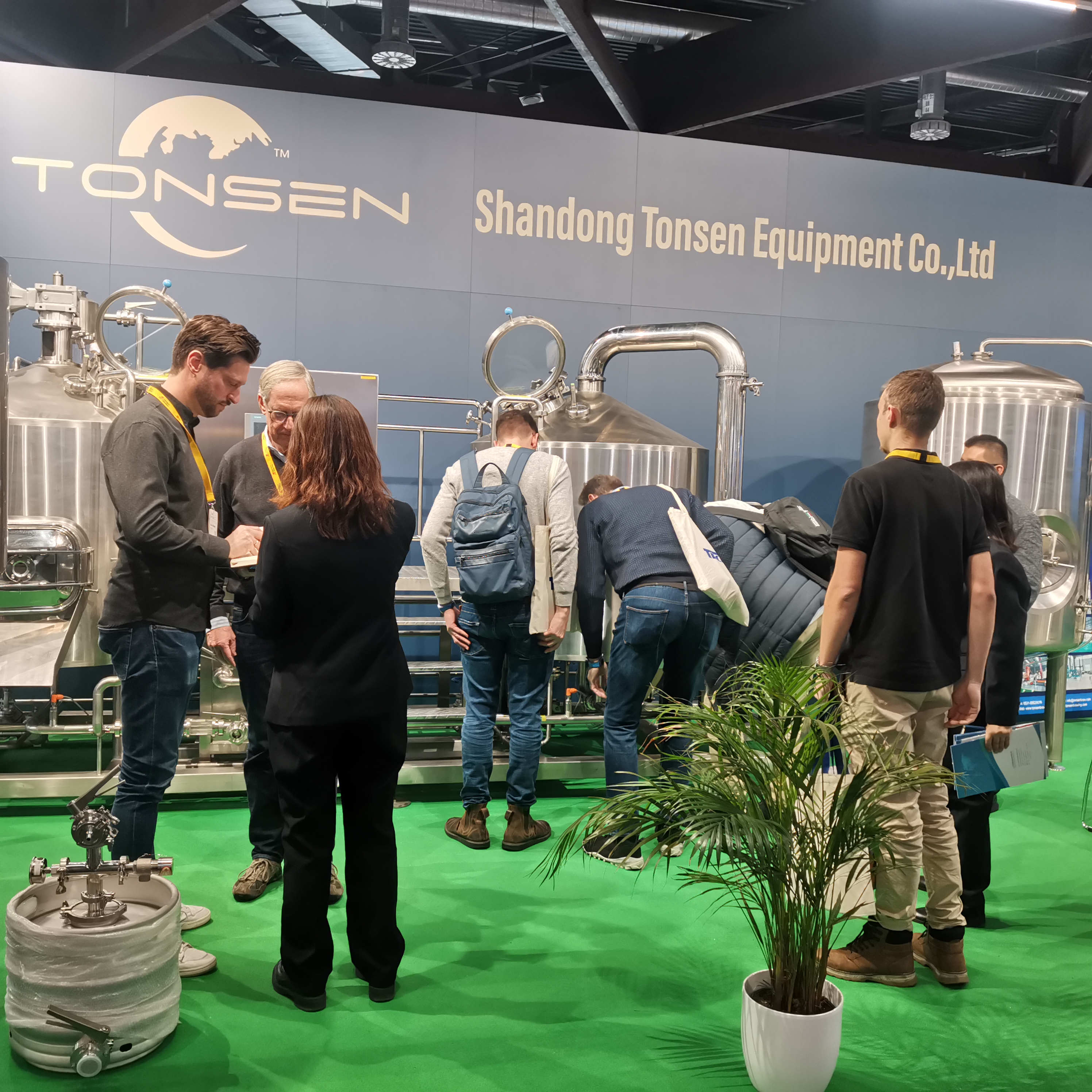
5. Precision control of the entire process of Tonsen equipment
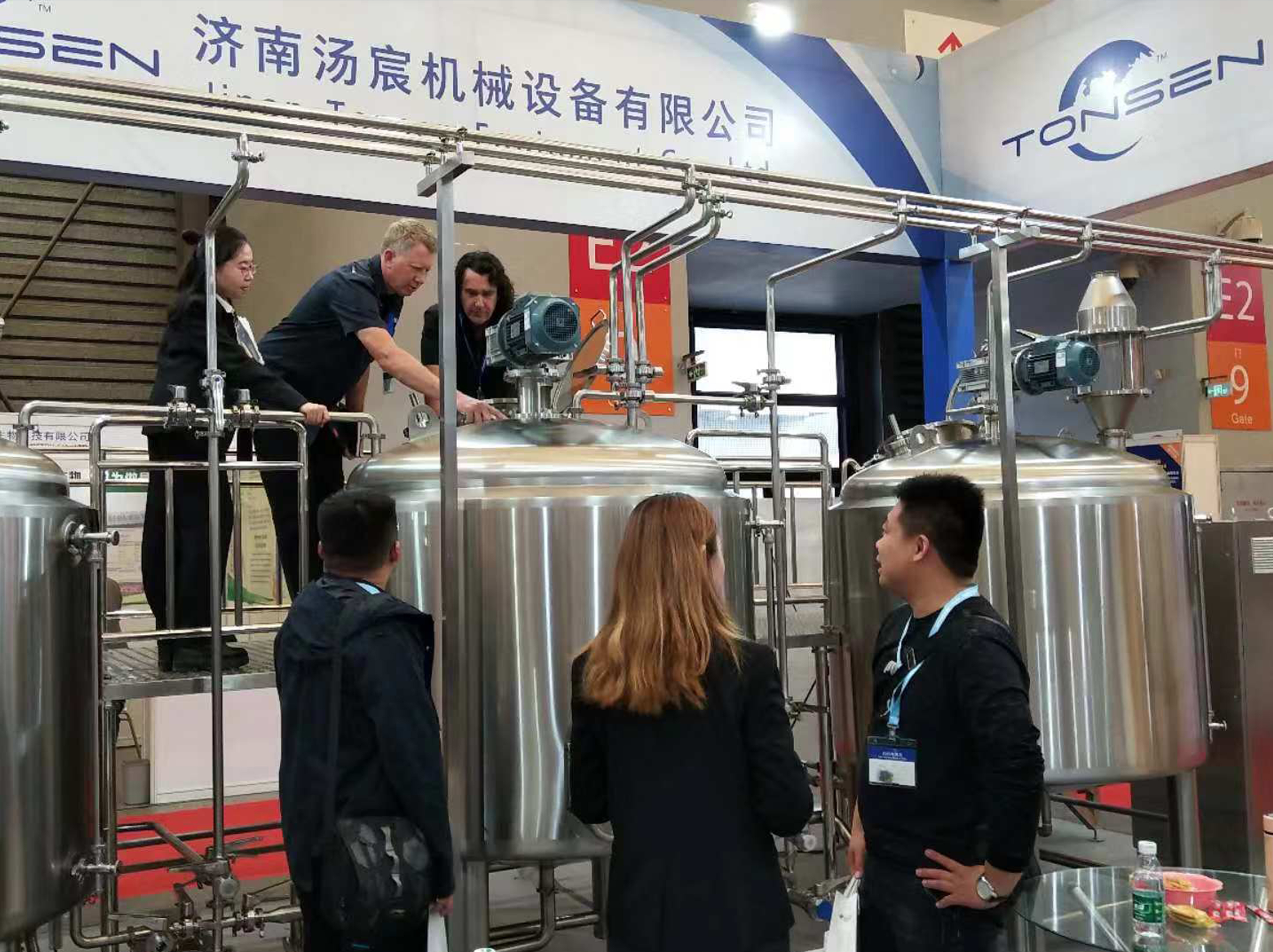
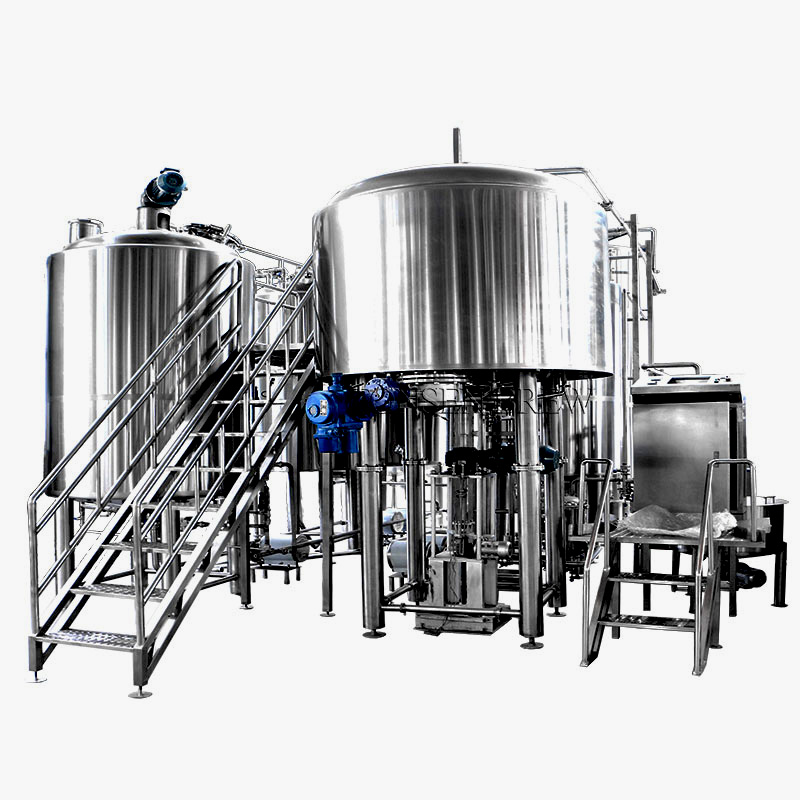
Shandong Tonsen Equipment Co., Ltd., as an international brewing equipment company, provides a complete commercial brewing system solution from raw material processing to filling. Its CCT (conical fermenter) and unitank fermenter series are made of SUS 304/316 stainless steel, equipped with Dimple jacket, automatic CIP cleaning ball, digital temperature and pressure sensor and safety valve, which can accurately control the temperature, pressure and cleanliness of the seven steps of crushing → saccharification → separation → boiling → fermentation → filtration → filling. Tonsen modular brewhouse supports 200L-20,000L production capacity, with optional steam or electric heating, PLC+SCADA one-click control, and provides customized process research and development, global technical support and financial leasing solutions, significantly reducing brewery equipment costs and improving project return on investment.