
Every step in the beer brewing process is crucial, and the mashing stage is precisely the first step of the entire brewing process.
Whether you operate a small craft brewery or a large commercial brewery, the beer mashing system is key to determining the flavor, color, and mouthfeel of the beer.
How to choose the right mashing equipment for your brewery? This article explains it in detail:
A complete beer mashing system typically includes the following core components:
- Mash TunThe mash tun is the core equipment of the entire mashing process, used to maintain enzyme activity at precise temperatures.Using a stainless steel mash tun ensures durability, hygiene, and thermal stability, which is particularly important for commercial beer production.
- Lauter TunAfter mashing, the mixture of wort and spent grains is transferred to the lauter tun.Clear wort is separated through slotted plates or wedge wire screens at the bottom, improving sugar extraction efficiency and wort purity.
- Hot Liquor Tank (HLT)The hot liquor tank stores and heats brewing water for use in mashing, sparging, and cleaning. It ensures temperature stability throughout the brewing process.
- Boiling Kettle / Whirlpool TankAlthough strictly part of the post-mashing stage, the boiling kettle and whirlpool tank are usually closely connected to the mashing system.After filtration, the wort enters the boiling kettle and is boiled with hops, imparting the beer’s unique bitterness and aroma.
- Control SystemModern commercial brewing systems are often equipped with fully automatic or semi-automatic control panels.Brewers can precisely adjust temperature, time, and flow rate via PLC or touchscreen, achieving efficient and stable production.
Why is a high-quality mashing system so important?The mashing stage is a combination of science and art.An efficient beer mashing system directly affects several key factors:
Beer Flavor and Aroma: Precise temperature control ensures balanced enzyme activity, resulting in more stable flavors.
Mashing Efficiency: Higher extraction rates mean more beer can be brewed from the same raw materials.
Product Consistency: Especially important for large-scale or multi-batch production.
Operational Efficiency: Automated control saves time and labor costs.
For commercial breweries, choosing an integrated brewing system that combines mashing, filtration, and boiling functions not only increases production capacity but also ensures product quality.
Types of mashing systems for breweries of different scales:
- Two-Vessel SystemSuitable for small to medium-sized breweries, such as brewpubs or microbreweries.Typically consists of a mash/lauter tun + boil/whirlpool tank, with a compact structure and low energy consumption, ideal for batches of 500L–2000L.
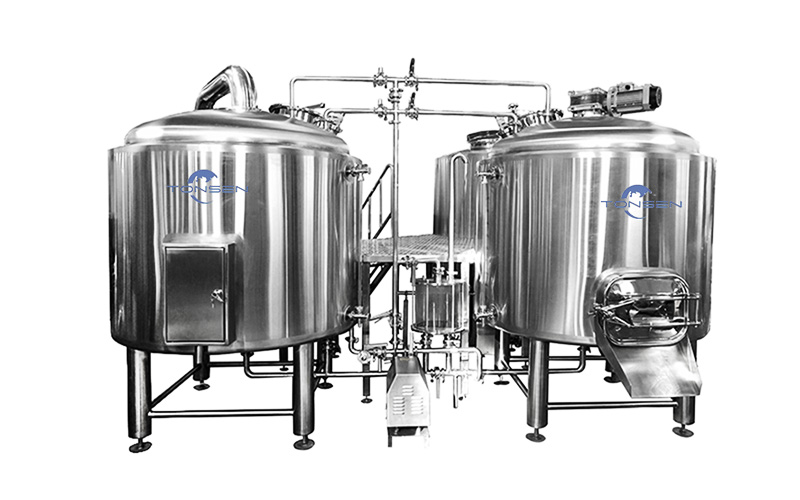
- Three-Vessel SystemIncludes separate mash tun, lauter tun, and boil/whirlpool tank.Multiple brewing steps can be performed simultaneously, improving production efficiency and flexibility.
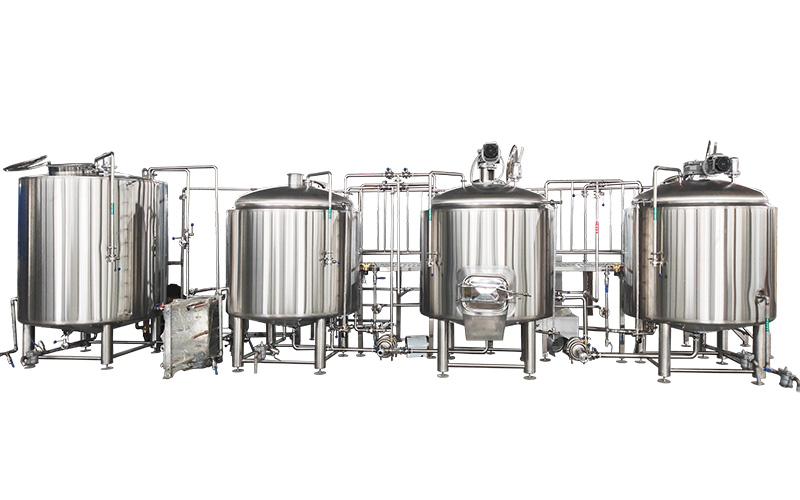
- Four-Vessel SystemCommon in large commercial breweries.Adds separate hot liquor tanks and whirlpool tanks, enabling continuous brewing and significantly reducing downtime.
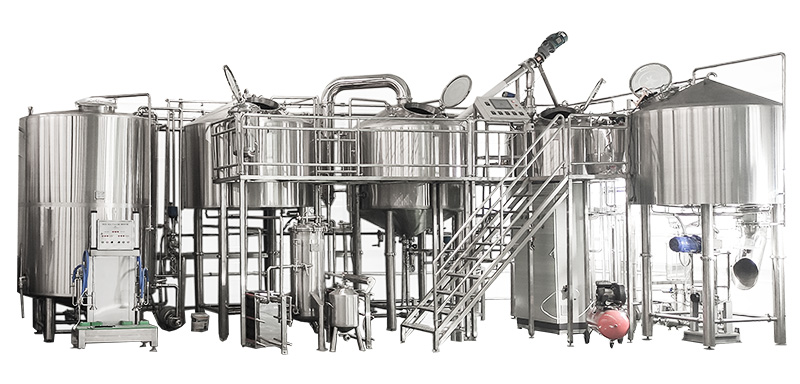
Comparison of heating methods:
Steam Heating: Precise temperature control, suitable for professional breweries.
Electric Heating: Easy to operate and clean, suitable for small systems or limited spaces.
Direct Fire Heating: Fast heating, but requires good ventilation and safety design.
Whether you’re a fledgling microbrewery or an expanding commercial brewing enterprise, investing in a high-quality stainless steel brewing system is key to ensuring stable taste, efficient production, and sustainable profits.
Looking for a reliable beer mashing system supplier? Contact us for a custom quote and start your beer brewing journey here!