
How is beer brewed commercially?
As one of the most popular alcoholic beverages in the world, commercial brewing of beer is not only a part of the food industry, but also a complex system that integrates machinery and equipment, engineering technology, brand marketing and cultural experience. Globally, beer production has long been separated from traditional small-scale hand-brewing and has entered the era of industrialization, automation and digitalization. From the site selection of the factory, equipment procurement to the process control of the entire brewing process, each link determines the taste, quality and commercial competitiveness of the beer.
1: Overview of the commercial beer brewing process
1.1 Raw material preparation
Commercial beer brewing starts with the selection of raw materials. The main raw materials include: malt, rice or corn (for adjusting sugar content), hops, yeast and water. Each raw material has a great impact on the taste. In industrial brewing, water quality usually needs to be softened to ensure the stability of the wort.
1.2 Saccharification and boiling
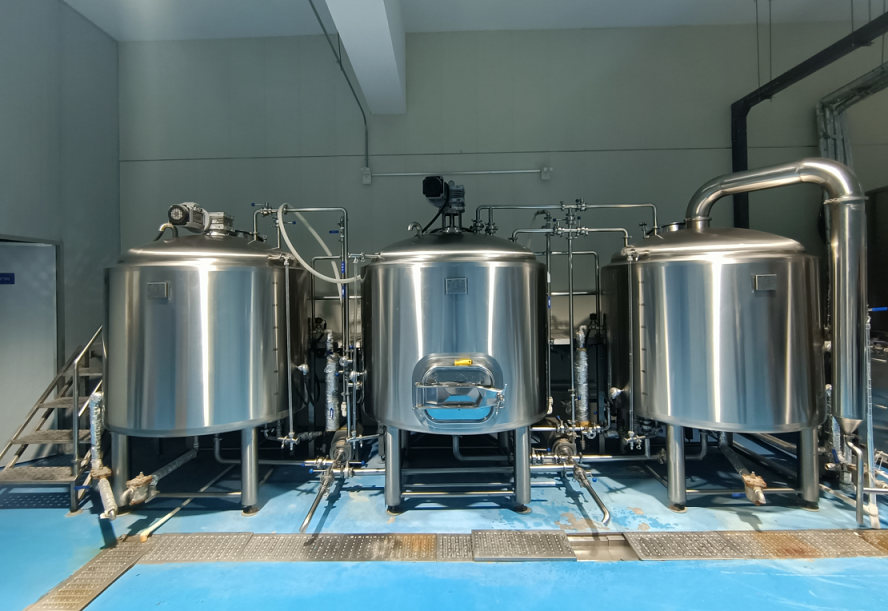
Saccharification in a commercial brew kettle is the most critical step in commercial beer brewing. Saccharification refers to mixing malt with hot water at an appropriate temperature to convert starch into fermentable sugars. Next, the wort is transferred to a boiling pot and boiled with hops, a process that affects the bitterness, aroma and shelf life of the beer.
Industrial breweries generally use automated brewery machinery to complete saccharification, boiling, transfer and other links, which not only saves manpower but also ensures the standardization and consistency of each batch.
1.3 Fermentation and maturation
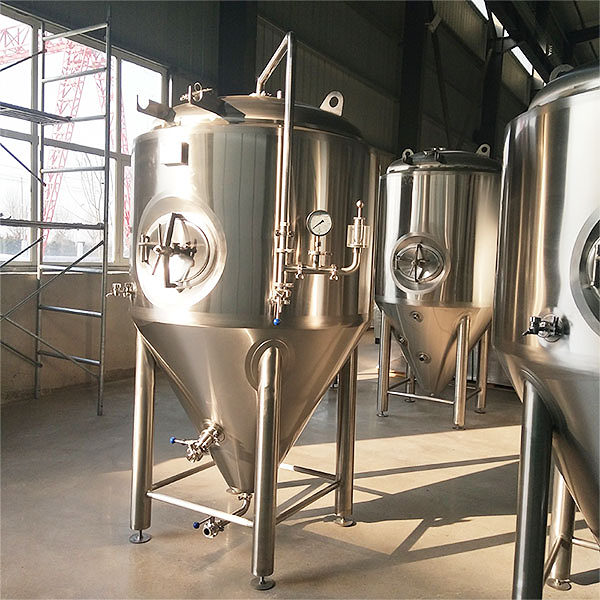
After the wort is boiled, it needs to be cooled quickly and transferred to a commercial beer fermentation tank, where yeast is added for fermentation. Commercial breweries usually use conical bottom stainless steel fermentation tanks to facilitate the removal of yeast precipitation and complete the transformation of the beer body under precise temperature control.
After fermentation, the beer enters the refrigeration stage (usually called "maturing"), which is usually treated with cold water tanks. Cold water tanks are an extremely important step in the beer brewing system. In order to improve the coordination of flavors, during this period, the factory will use an automated system to detect alcohol content, carbon dioxide content and taste changes.
1.4 Filtration and packaging
The matured beer needs to be finely filtered to remove impurities, and then the filling system and labeling system in brewery solutions are used for final packaging. Common packaging forms include bottles, cans and barrels, depending on the sales channel. Modern factories are usually equipped with a complete set of automatic filling production lines, which can complete the filling task of tens of thousands of bottles in a very short time.
2: The core role of equipment in commercial brewing
2.1 Types of commercial beer brewing equipment
A mature commercial brewery requires at least the following key equipment:
Commercial brew kettle: used for heating and saccharification, which is the first step of the whole process.
Commercial beer fermentation tank: supports large-capacity and high-efficiency fermentation. Some breweries use multi-stage fermentation tanks for flavor control.
cip automatic control system: used to accurately adjust parameters such as temperature, pressure, and fermentation time.
Filling line and cleaning system: integrated into brewery solutions to improve the efficiency of the back end.
As brewing technology continues to advance, commercial beer brewing equipment is not only reflected in the performance of a single machine, but also in the coordination ability of the entire system.
2.2 Differences between craft brewing equipment and industrial equipment
Small manufacturers or start-up brands often choose craft brewery equipment for sale to get started. This type of equipment has a small capacity, flexible configuration, and can be manually operated, which is convenient for testing recipes, making limited editions or local market trials. You can also choose home brewing equipment, which is inexpensive, easy to operate, and easier to transport, making it very suitable for home use.
Mature breweries are mostly equipped with a complete set of automated industrial equipment to ensure efficient operation and consistent quality. Many medium-sized breweries also purchase used brewing equipment for sale from the market to control costs and quickly deploy production lines.
3: Market trends and structural analysis of the brewing industry
3.1 Current status of the global brewing industry
According to the Global Brewing Industry Report, more than 35% of the world's beer production is currently controlled by the top ten biggest brewery companies, such as AB InBev, Heineken and Carlsberg. These companies have established a stable supply chain around the world through large-scale equipment investment and brand marketing.
On the other hand, the breweries industry has also seen a trend of diversification - localization, personalization, and cultural scene-based development have become the path for emerging breweries to stand out.
3.2 Trend of integration of local breweries and culture
In recent years, many bars and small breweries have begun to try to integrate cultural elements to enhance user experience. Combined with theme activities such as "live music at bars near me", small breweries not only sell beer, but also become an important carrier of urban cultural life. Consumers no longer come just for "drinking", but pay for atmosphere, stories and experiences.
This trend has also prompted a large number of young entrepreneurs to enter the brewing industry, seeking unique brand positioning and more flexible brewing methods.