

How crucial is the CIP system in the beer brewing process?
CIP, or Clean in Place, refers to a system that automatically cleans the interior of the equipment without disassembling it. Imagine manually disassembling the tank, cleaning every pipe, and wiping down every corner after every brew. How tiring would that be? At this point, the CIP system acts like an automated cleaning robot within the brewery, flushing away all brewing residue with high-temperature, high-pressure cleaning fluids.
These CIP solutions typically include alkali, acid, and disinfectant, performing different tasks at different stages to ensure that the interior of all equipment is clean enough to "reflect your reflection."
Why is cleanliness so important in beer brewing?
You can choose the best malt, use the freshest yeast, and perfectly control the temperature and fermentation during brewing...but if your tanks aren't cleaned thoroughly, all of this is for naught.
During the beer fermentation process, the most feared threat is "outsiders"—contaminating microorganisms. Without thorough cleaning, residual sugars, proteins, and yeast become breeding grounds for bacteria, which can, at best, alter the beer's flavor, or, at worst, ruin the entire tank and even affect the next batch. This is why the CIP cleaning process is essential for both large breweries and small craft breweries.
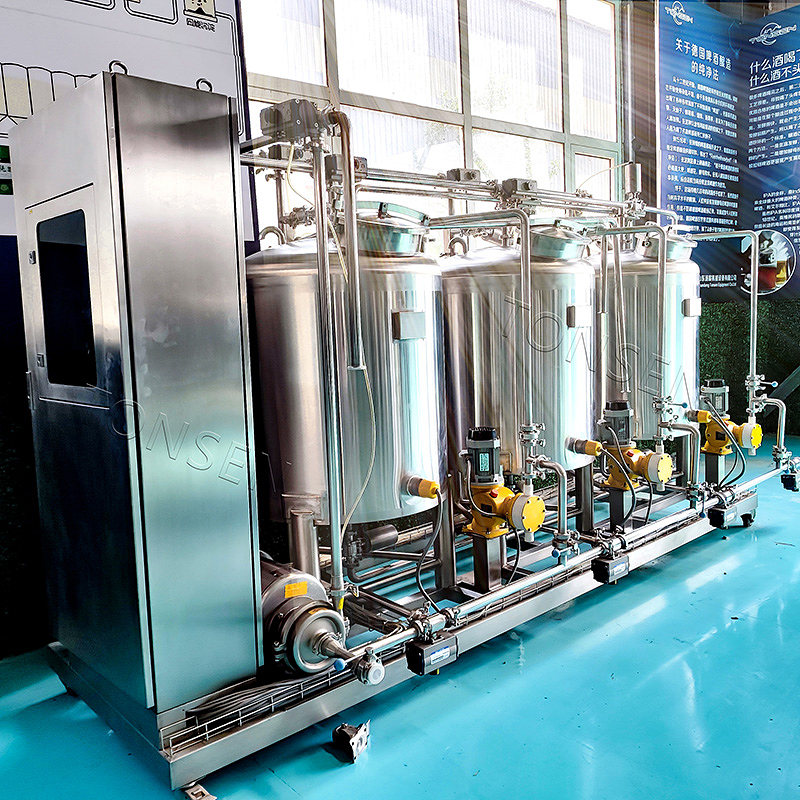
What does a CIP system look like?
A typical CIP system typically includes:
Tanks: typically two tanks, one for alkali and one for acid.
Heaters: raise the temperature of the cleaning solution for improved efficiency.
Circulating pumps and control valves
CIP tank cleaning equipment: such as rotating spray balls.
Automatic control panels: adjust parameters such as time, temperature, and flow rate.