

From Home to Industry: The Complete Beer Equipment Selection Guide by TONSEN Brew
Introduction
With the global craft beer boom, beer equipment selection has evolved from simple tools to scalable, systematic solutions. Whether you are a home brewing enthusiast, a small-scale producer, or planning an industrial upgrade, choosing the right system directly impacts product quality and return on investment.
TONSEN Brew, with its industry insights and case studies, provides a structured overview of brewing equipment by scale: home, professional home, microbrewery, and industrial.
Equipment Levels & Matching Scenarios
Home Brewing: compact mash/boil kettles, small fermenters, basic temperature control.
Professional Home Brewing: stainless steel kettles, programmable controls, scalable modules.
Microbrewery: multi-tank fermentation systems, automated controls, CIP cleaning.
Industrial Brewing Line: large-capacity tanks, PLC systems, full automation, data traceability.
Key Components
Mash/Boil Systems: stainless steel, heat efficiency, easy cleaning.
Fermentation & Storage: precision temperature control, hygienic design.
Cooling & Pipelines: polished steel, minimal dead corners.
Automation: manual, semi-automatic, or full PLC systems.
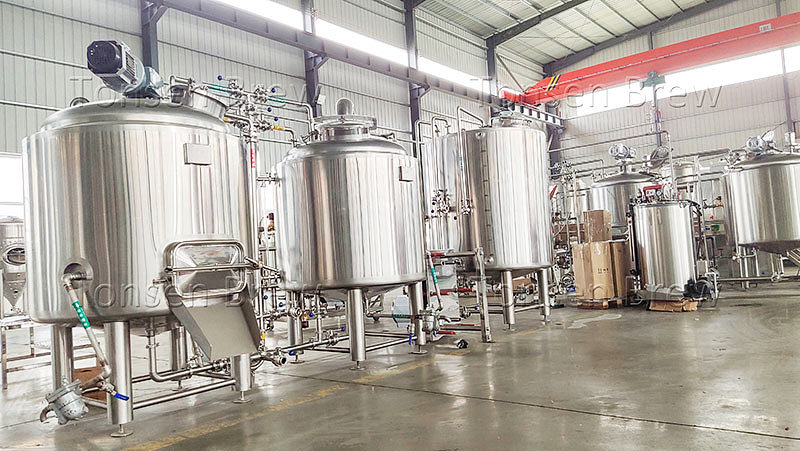
Stainless Steel Importance
304 stainless steel suits most uses, while 316L provides higher corrosion resistance, especially under acidic cleaning. Durable materials ensure hygiene, consistent flavor, and lower maintenance.
ROI and Costs
Annual net profit increase = Capacity gains – Extra operating costs.
ROI = Net profit increase / Equipment investment × 100%.
Key factors: stable production, energy/water efficiency, reduced labor, reliable spare parts.
Sample Equipment Lists
| Equipment Category | Typical Capacity Range | Current Market Price (USD) | Notes for Buyers |
|---|---|---|---|
| Brewhouse System | 3–20 BBL | $25,000 – $120,000 | Choose capacity based on expected production scale |
| Fermentation Tanks | 500–5,000 L | $5,000 – $35,000 | Jacketed design for temperature control is recommended |
| Bright Beer Tanks | 500–5,000 L | $4,500 – $30,000 | Ensure compliance with local food-grade standards |
| Cooling System | 5–50 HP | $3,500 – $25,000 | Essential for fermentation stability |
| Control Panel | PLC / Semi-automatic | $2,500 – $15,000 | Automation helps reduce labor costs |
| CIP Cleaning System | 100–300 L | $1,500 – $6,000 | Necessary for hygiene and safety |
| Packaging Line (Optional) | Bottling / Canning / Kegging | $15,000 – $80,000 | Investment depends on distribution model |
Case Highlights
Case A: Output up 30%, energy costs down 12%, ROI payback in 18 months.
Case B: Improved temperature control, customer satisfaction up, sales grew 20%.
FAQs
Why stainless steel? Hygiene, durability, easy maintenance.
How to size fermenters? Based on weekly production cycles.
What costs impact ROI? Equipment, energy, labor, depreciation.
How to assess suppliers? Spare parts, training, warranty support.
Common beginner mistakes? Chasing low costs, ignoring hygiene and scalability.