

The core process of beer brewing is "raw material processing → saccharification → fermentation → filling"
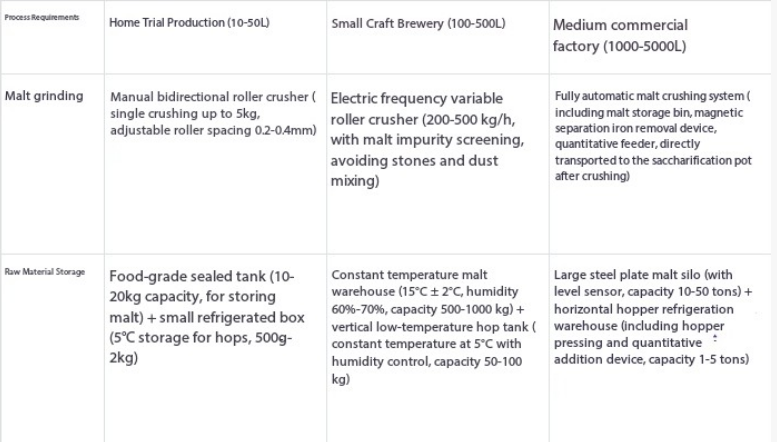
Raw material processing: preparing the ingredients for saccharification (the core is "crushing malt + retaining flavor")
The key to raw material processing is to "fully expose the malt starch while preventing the deterioration of hops and auxiliary materials." The differences in equipment of different scales are reflected in "crushing efficiency" and "storage accuracy."
2. Saccharification: The "soul transformation" of beer (converting starch into sugar, which determines the alcohol content and taste)
Mashing is the core process area of beer brewing. Equipment requires precise temperature control and efficient filtration, which directly impacts the quality of the wort. Equipment investment in this step accounts for 30%-40% of the total equipment cost.

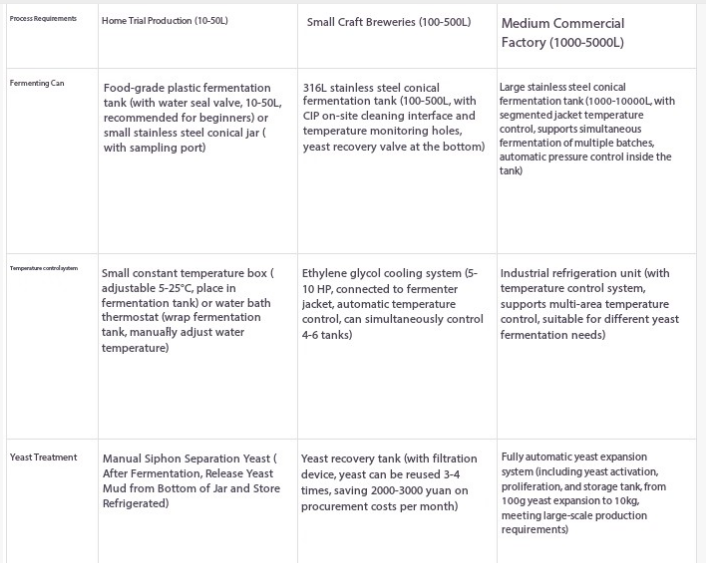
3. Fermentation: The "critical stage" for flavor formation (yeast turns to alcohol, producing a unique aroma)
The core of fermentation equipment is temperature control and contamination prevention. 80% of the flavor differences in craft beer (such as the fruity aroma of IPA and the refreshing feel of lager) depend on the precision of equipment control during the fermentation process.
4. Filling: The final step before beer leaves the factory (preventing oxidation, maintaining freshness, and determining shelf life)
The filling process directly impacts the beer's shelf life and consumer experience. Oxidized beer can produce a "cardboard taste," while poor sealing can lead to air leaks and foam loss. The equipment selected for this step should be tailored to your packaging solution (bottles, cans, or kegs).

If you need a more precise equipment configuration solution (such as adapting to specific beer styles or meeting local compliance requirements), please contact us. We provide a one-stop service of "capacity estimation + equipment selection + plant layout" and provide a customized solution free of charge to help you avoid detours and quickly start production!