
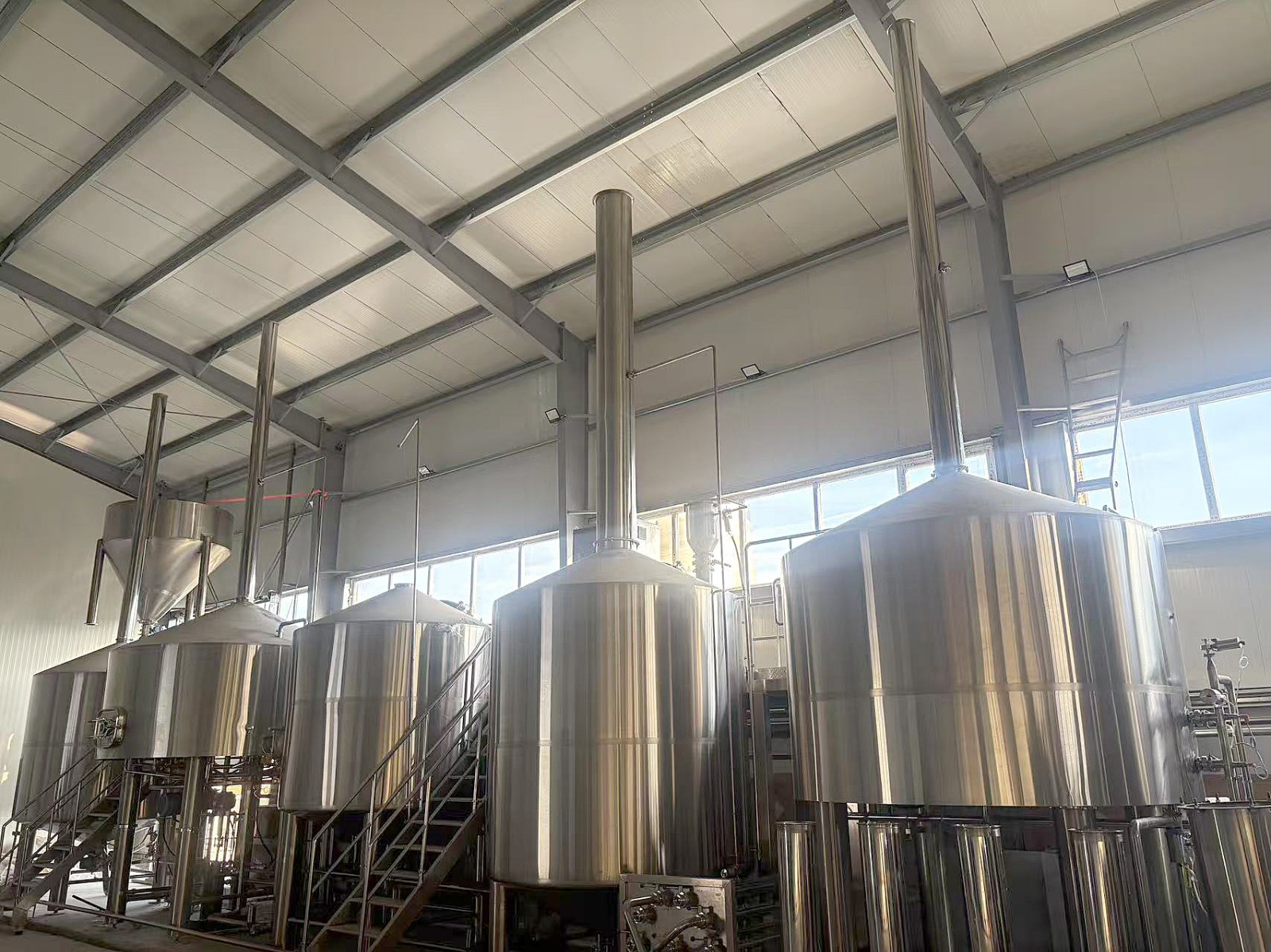
A 5000L brewhouse system is considered a mid-to-large scale setup, ideal for commercial breweries that are looking to produce significant quantities of beer per batch. This system would typically be used by breweries producing large batches of beer or aiming to scale up their operations. Here's a breakdown of what you’d typically expect in a 5000L system:
Key Components of a 5000L Brewhouse System:
Mash Tun (5000L):
A large vessel for mixing malted grains with hot water to convert starches into fermentable sugars.
Typically equipped with temperature control, a mash agitator (rakes), and a recirculation pump to help mix and maintain the mash temperature.
Some systems use a decoction mashing method, where part of the mash is boiled and returned to the rest of the mash to raise the temperature.
Lauter Tun (5000L):
After mashing, the wort is transferred to the lauter tun to separate the solids (spent grains) from the liquid wort.
In larger systems, the lautering process can take longer, and often a high-efficiency lauter tun is used to increase yield by extracting as much fermentable sugar as possible.
Boil Kettle (5000L):
The wort is boiled in this vessel, and hops are added for bitterness, flavor, and aroma.
The boil kettle is often fitted with a hop-back to filter out hop debris and a wort chiller or whirlpool system to help separate trub (the coagulated proteins and hops) from the wort after boiling.
You might also have a steam jacket or direct fire heating method, depending on your setup.
Whirlpool Tank:
A separate vessel used after boiling to whirlpool the wort and help separate the hop debris and other solids.
This tank allows for better clarity and easier transfer of the wort into the heat exchanger for cooling.
Heat Exchanger:
A critical component for cooling the hot wort quickly before fermentation.
In a 5000L system, plate heat exchangers are commonly used to maintain precise control over cooling rates.
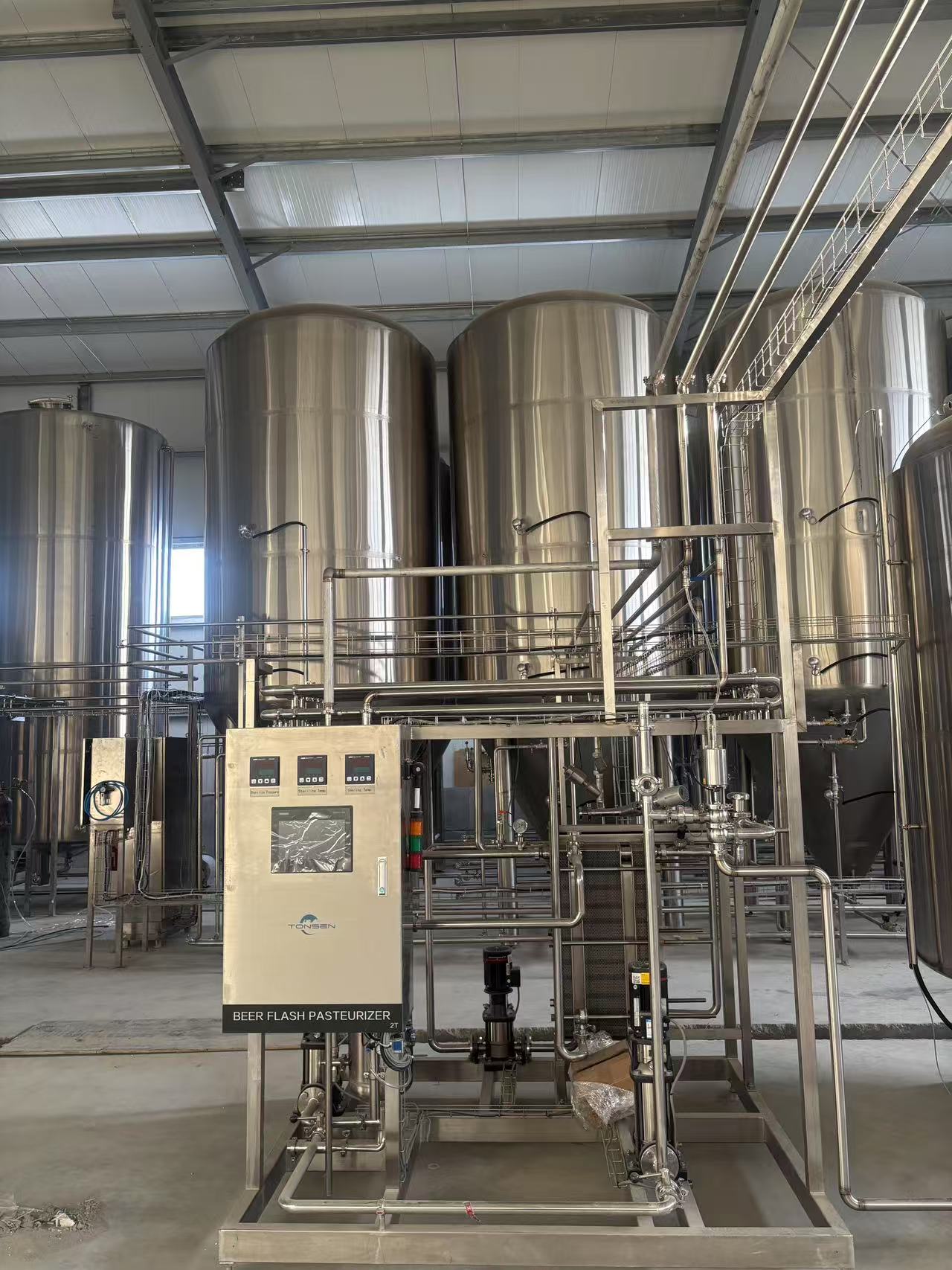
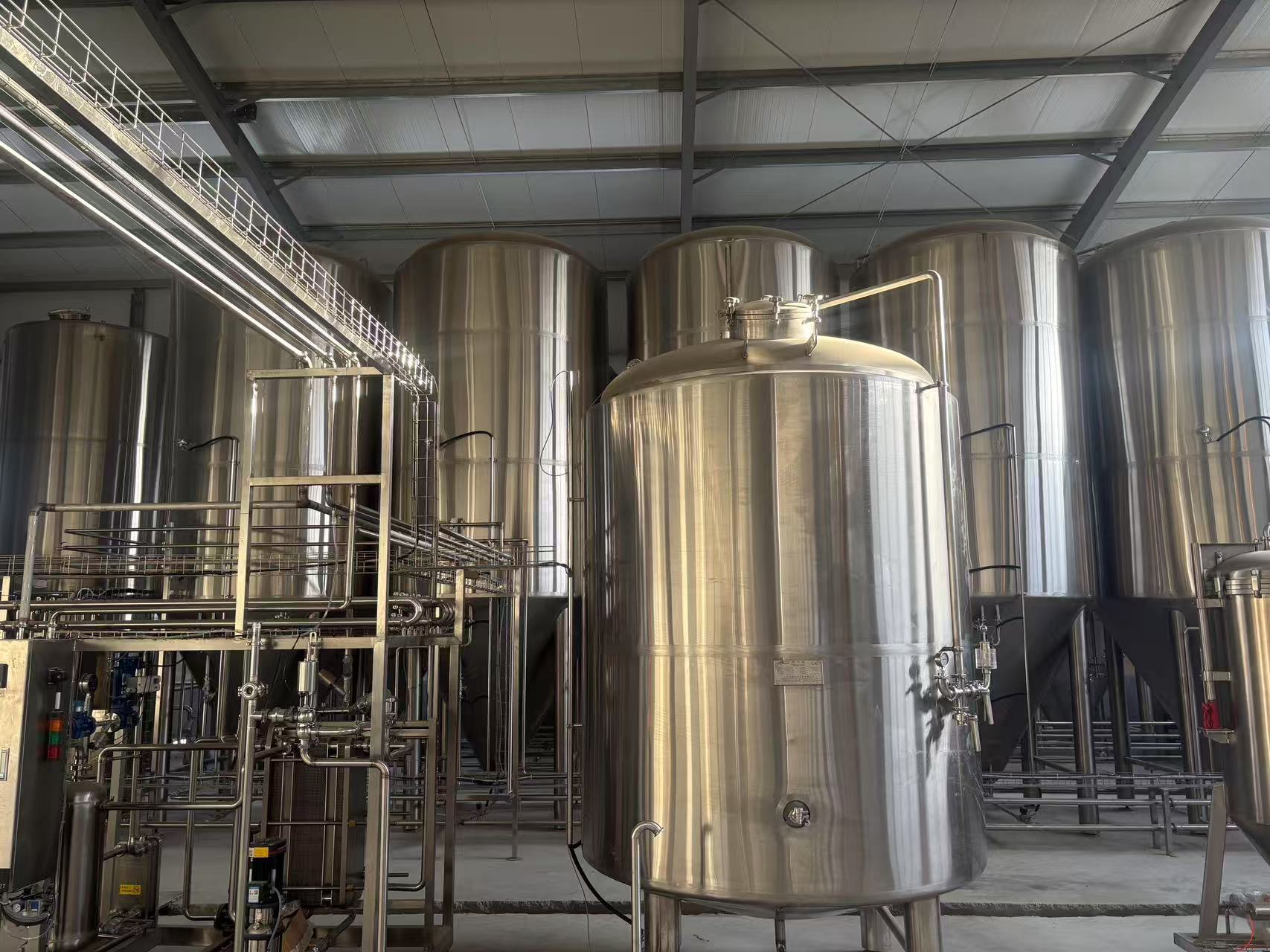
Fermentation Tanks (often 5000L or larger, depending on capacity):
After cooling, wort is transferred to fermentation tanks, where yeast is added, and fermentation occurs.
Some brewhouses use conical fermenters (which are conical at the bottom) to help separate yeast and sediment after fermentation.
Automation and Control:
Automated Control Systems: At this scale, automation plays a key role in efficiency. The system will likely have a PLC (Programmable Logic Controller) or touchscreen interface that controls things like:
Temperature management (for mashing, boiling, and fermentation).
Time management (to ensure that the mash, boil, and hop additions happen at the right times).
Pumping and flow control (for moving wort between vessels).
Data logging for quality control and recipe consistency.
Recipe Storage: Advanced systems allow you to store and recall recipes, making it easier to replicate beers and manage multiple batches.
Additional Features:
Steam System: Larger systems often require a steam boiler to provide heat for the boil kettle and possibly the mash tun, depending on the heating method.
Wort Aeration: Oxygenation of the wort before fermentation is key for yeast growth, so some systems include aeration stones or a wort oxygenation system.
** CIP (Clean-In-Place) System**: Cleaning large brewing equipment is crucial for hygiene. A CIP system automates the cleaning process for your mash tun, boil kettle, fermenters, and pipes.
Typical Output:
Batch Size: 5000L is usually a single batch size, so at the end of fermentation, you'll end up with roughly 5000L of finished beer (after factoring in some loss during the fermentation process and packaging).
Annual Output: Depending on how many batches you run per week/month, you could scale up your output to hundreds of thousands of liters annually. For example, if you're brewing 3 batches a week, that’s 15,000L a week, or 780,000L annually.
Considerations:
Space: A 5000L brewhouse system will take up a lot of space, so your brewery facility should have ample room for the brewhouse, fermentation tanks, storage, packaging area, and cleaning stations.
Utilities: Ensure you have access to enough water, electricity, steam (if needed), and possibly gas depending on the heating method.
Maintenance: Regular maintenance is necessary to ensure your system runs efficiently. You'll need skilled operators who can troubleshoot, manage the system, and perform maintenance tasks.