

100HL (10,000L) fermentation tank, bright tank, wort buffer tank pressure maintenance completed.
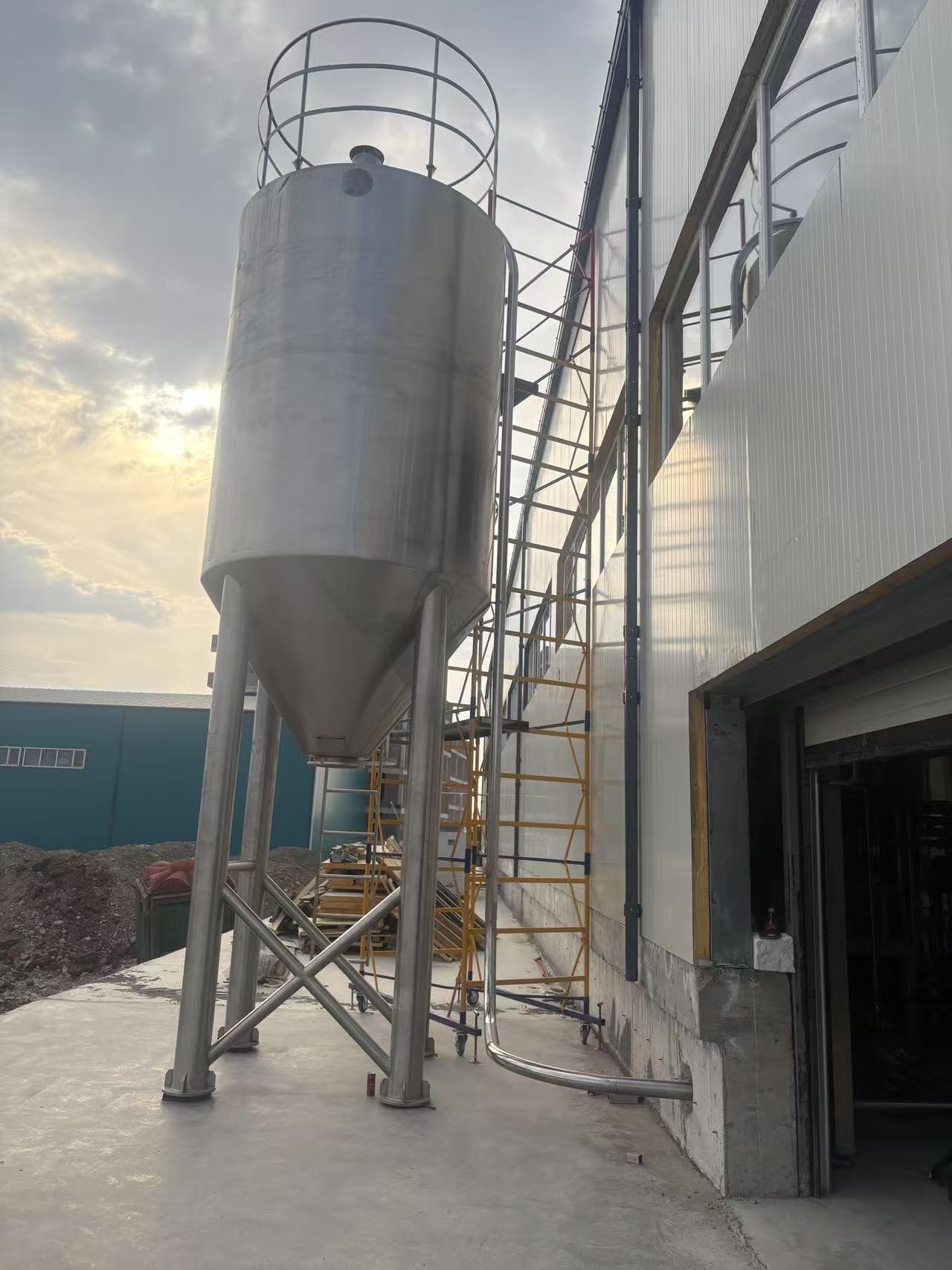
Optional: Dry-hopping port, carbon stone (if used as unitank)
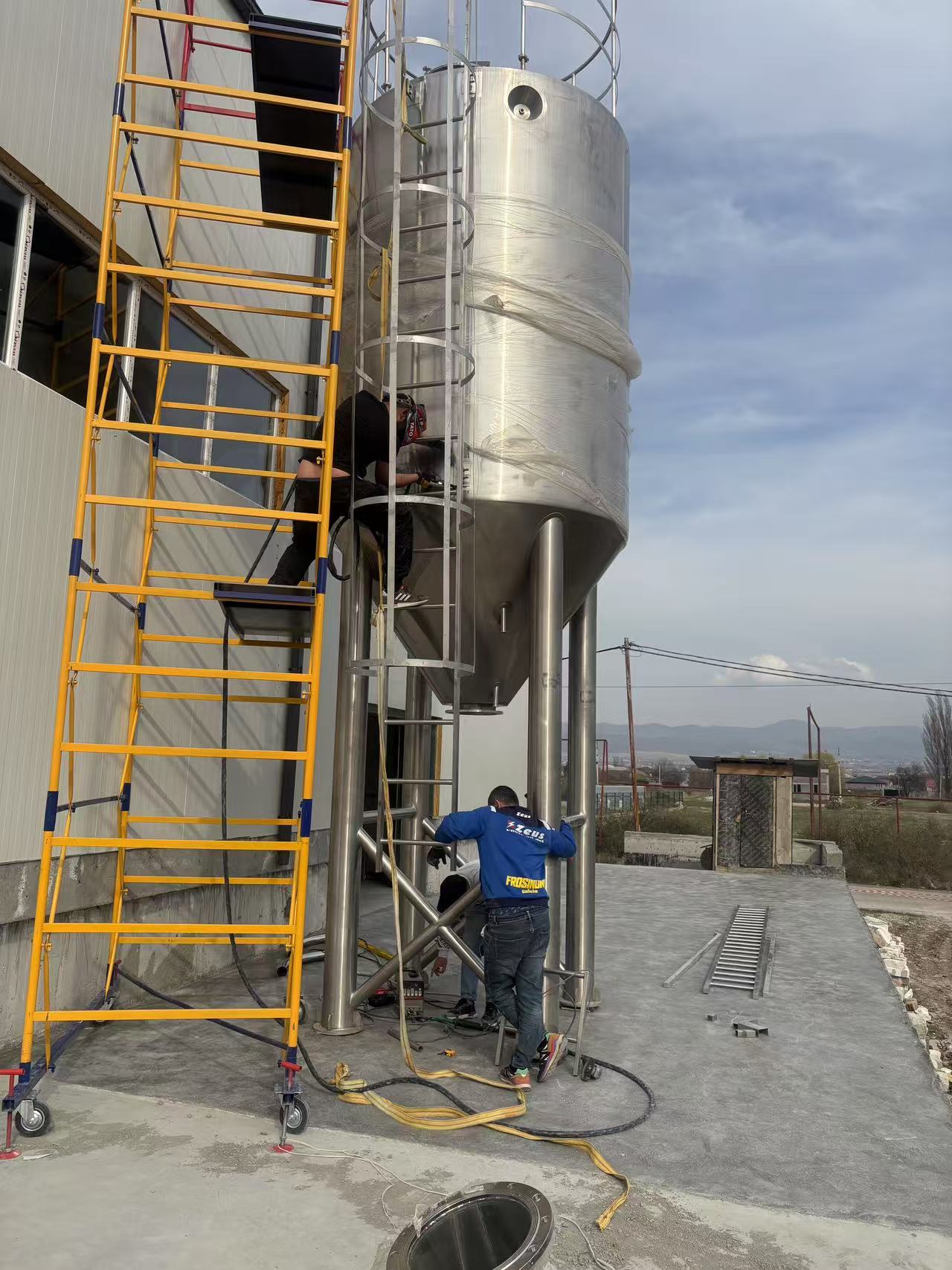
Level indicator or sight tube (optional)
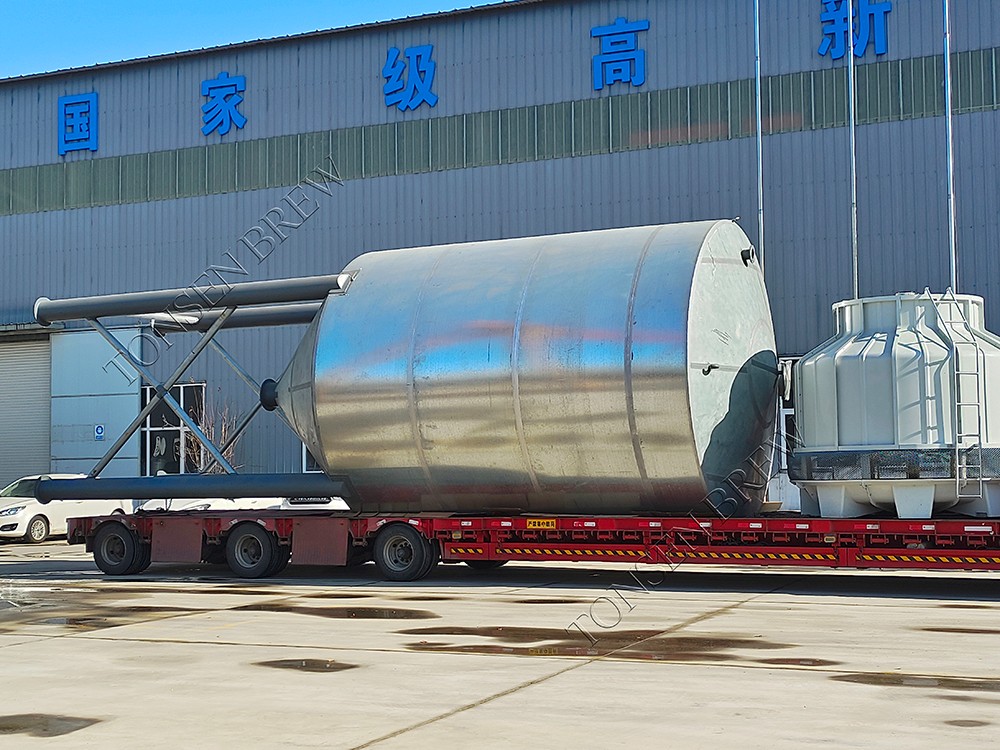
A 10,000L fermentation system is designed for commercial-scale breweries producing high volumes — perfect for regional distribution or contract brewing operations. Here's a complete breakdown of what a typical 10,000L (100 hL) fermentation system includes, how it works, and the optional upgrades available for scaling and automation.
1. Fermentation Tanks (100 hL each)
Type: Cylindroconical Fermenters (CCFV), often unitanks
Volume:
Effective: 10,000L (~85–90% of total)
Total: ~11,000–11,500L
Pressure Rating: 1.5–2.0 bar (for fermentation + carbonation)
Material: SUS304 (or SUS316 for acidic/sour styles)
Insulation: 80–100mm PU foam
Finish: Inner Ra ≤ 0.4μm; polished for sanitary conditions
Cooling Zones: Dual or triple glycol zones (cone + side + top)
Fittings:
Side/top manway
PRV & vacuum valve
CIP arm with 360° spray ball
Racking arm with rotating position
Yeast dump outlet (butterfly valve)
Sample valve, thermowell, pressure gauge
Optional: Carbonation stone, level sensor, hop port
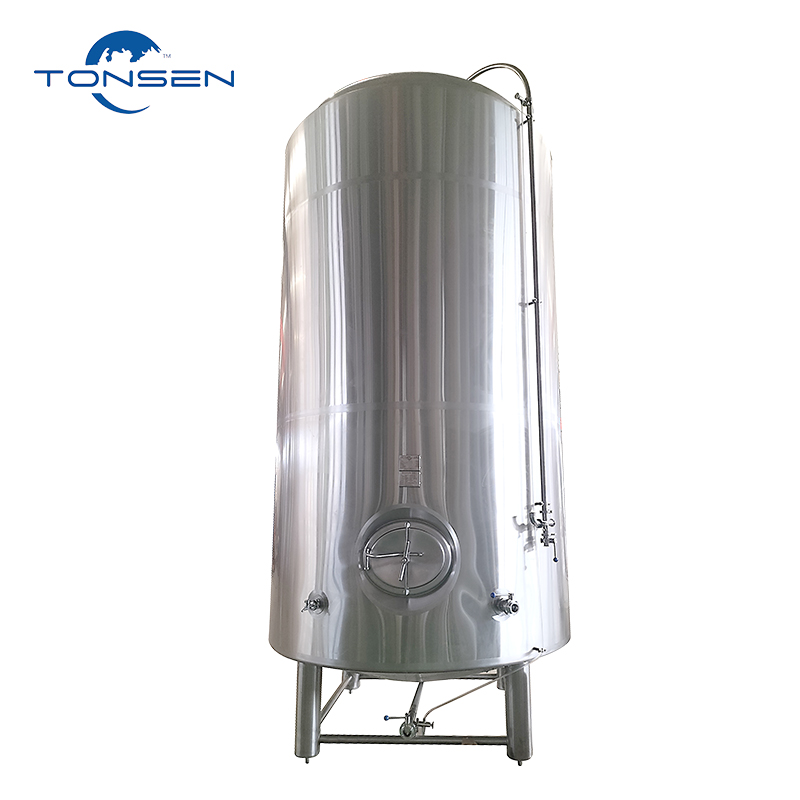
2. Bright Beer Tanks (BBTs) – 100 hL Matching Size
Vertical or horizontal
Higher pressure rating: 2.5–3.0 bar
Designed for carbonation, clarification, and packaging
Sight glass or level tube
Carb stone, sampling valve, dual glycol zones
3. Glycol Chilling System
Glycol Chiller/Compressor Unit sized for the number of tanks in operation
Glycol Tank (buffer tank), typically 2000–5000L
Piping System: Insulated SS or PPR piping to tanks
Automation Options:
Solenoid valves per tank (controlled via temp sensors)
Integrated control panel (manual/PLC/SCADA)
4. Control Panel (Cellar Panel)
Central or local digital control for tank temperatures
Options:
Manual (PID controllers)
Semi-auto (PLC + HMI with alarms)
Full auto (touchscreen, cloud logging, mobile access)
Can integrate with brewhouse and CIP control
Tanks arranged in rows or double rows (against walls or with CIP access between)
Glycol pipes run overhead or underfloor
Centralized CIP station shared across fermenters and BBTs