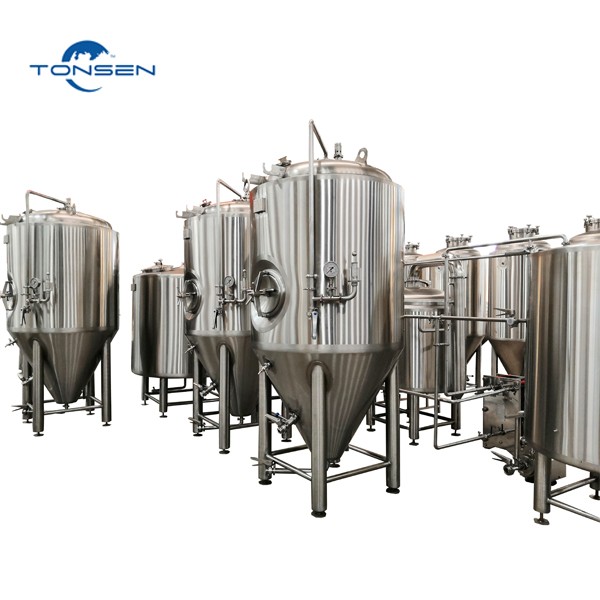
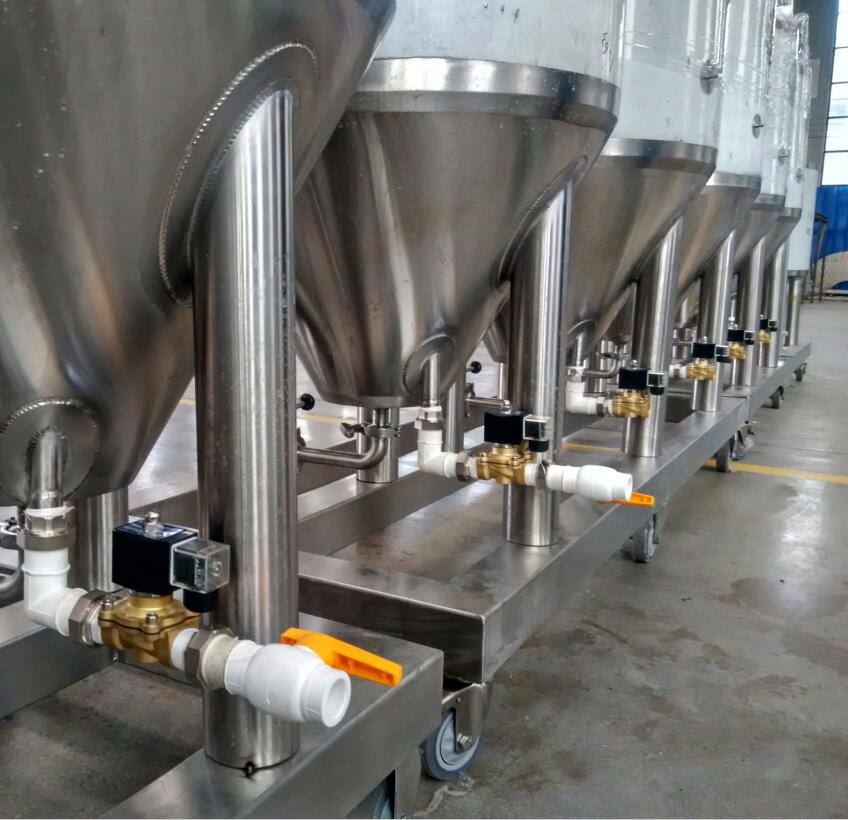
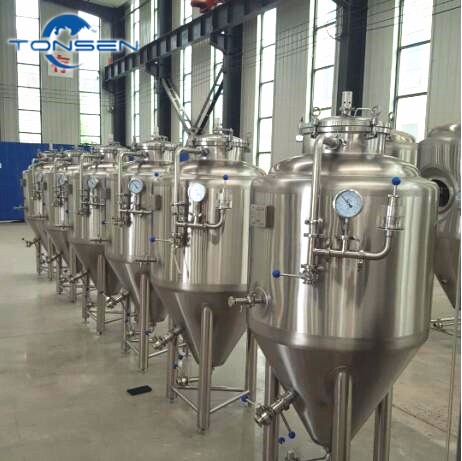
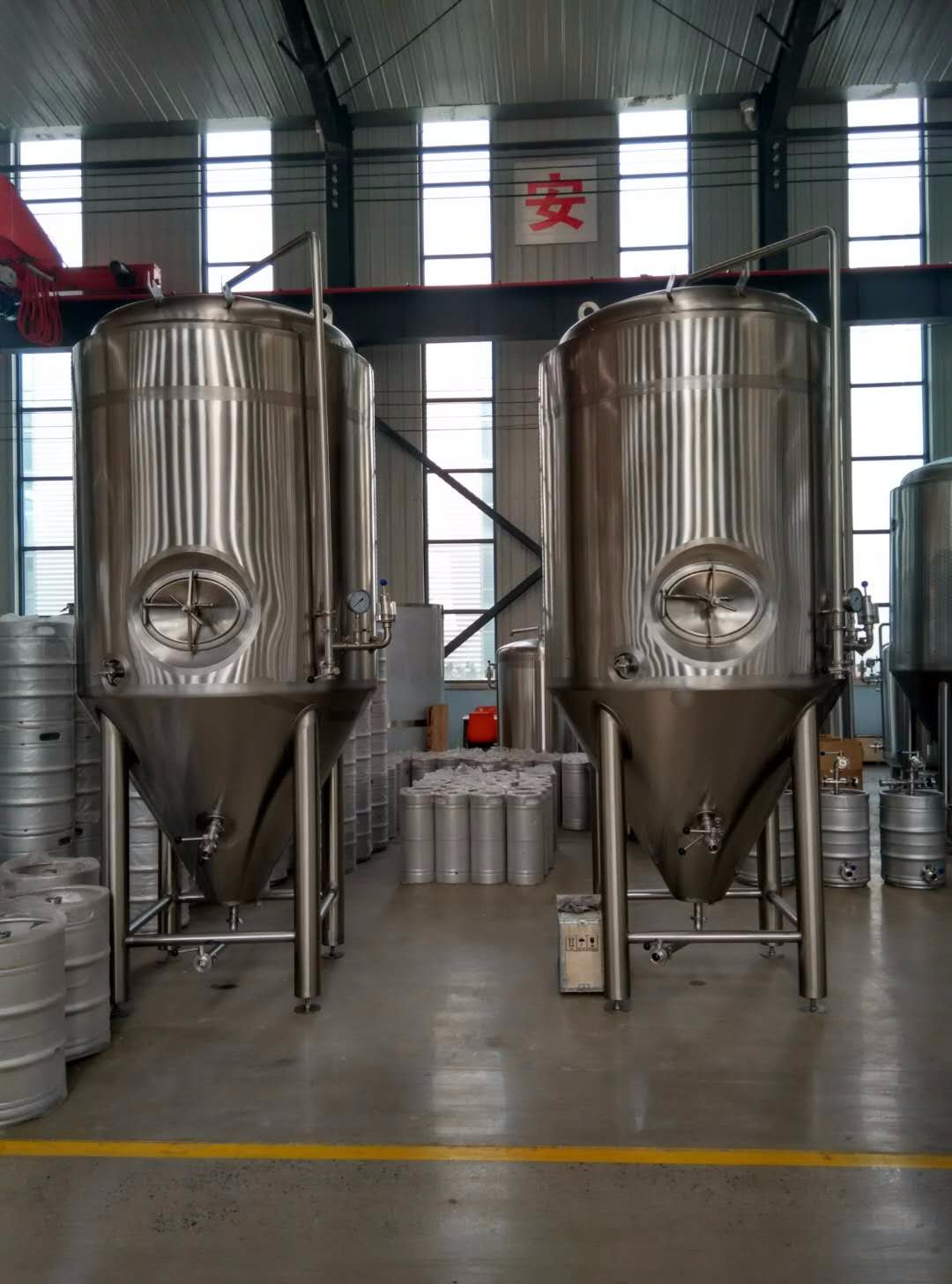
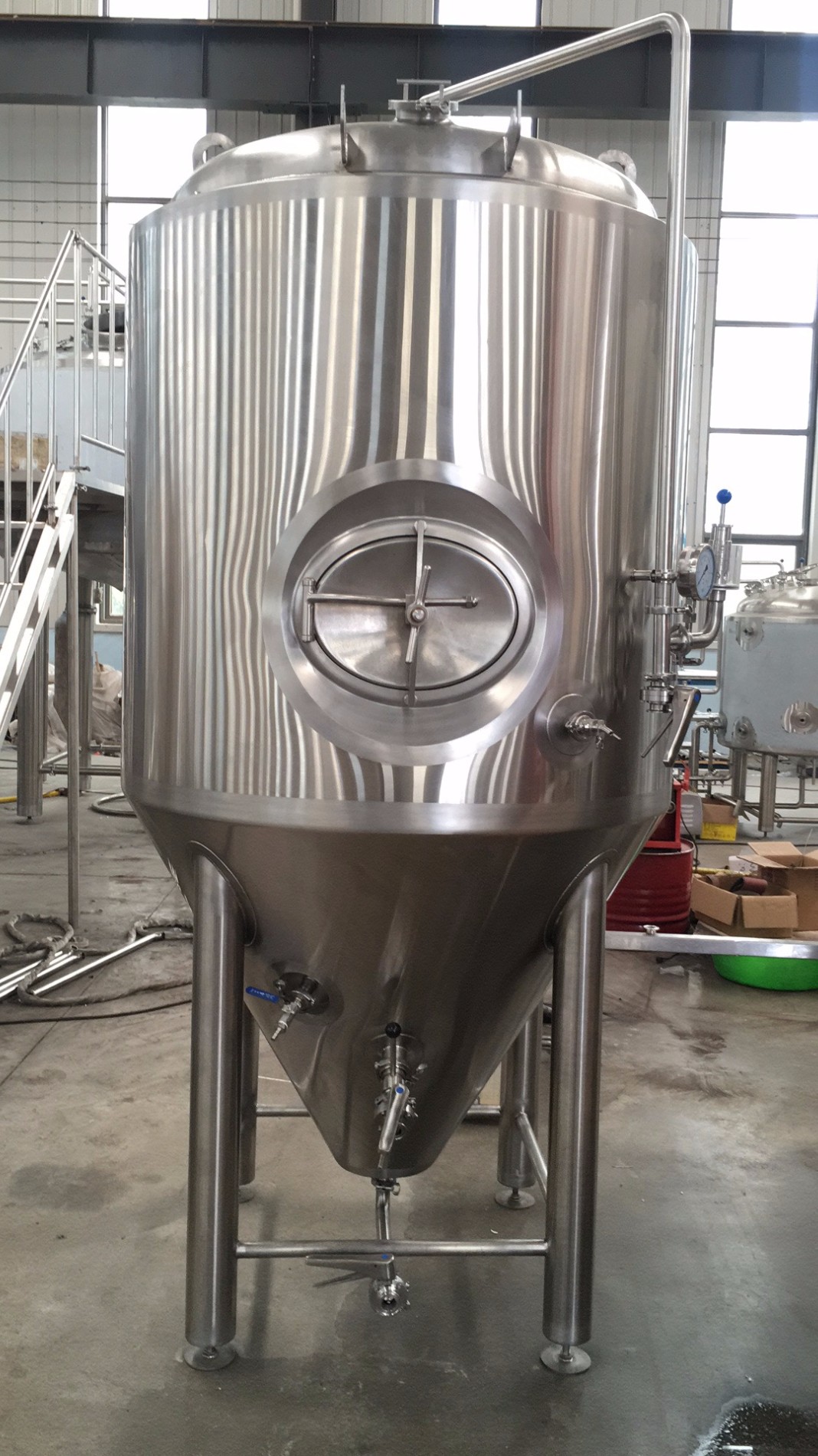
The fermentation system is mainly composed of fermentation tanks and clear wine tanks.The fermentation tank is designed differently according to the fermentation process.The general fermentation tank is the upper head, the lower cone structure, the tank itself is equipped with a cooling device, the cone part of the tank has a cooling jacket, the cylinder part has two to three cooling jacket.This can not only meet the cooling requirements and guarantee the cooling rate of the fermentation tank, but also help to precipitate and preserve the yeast.
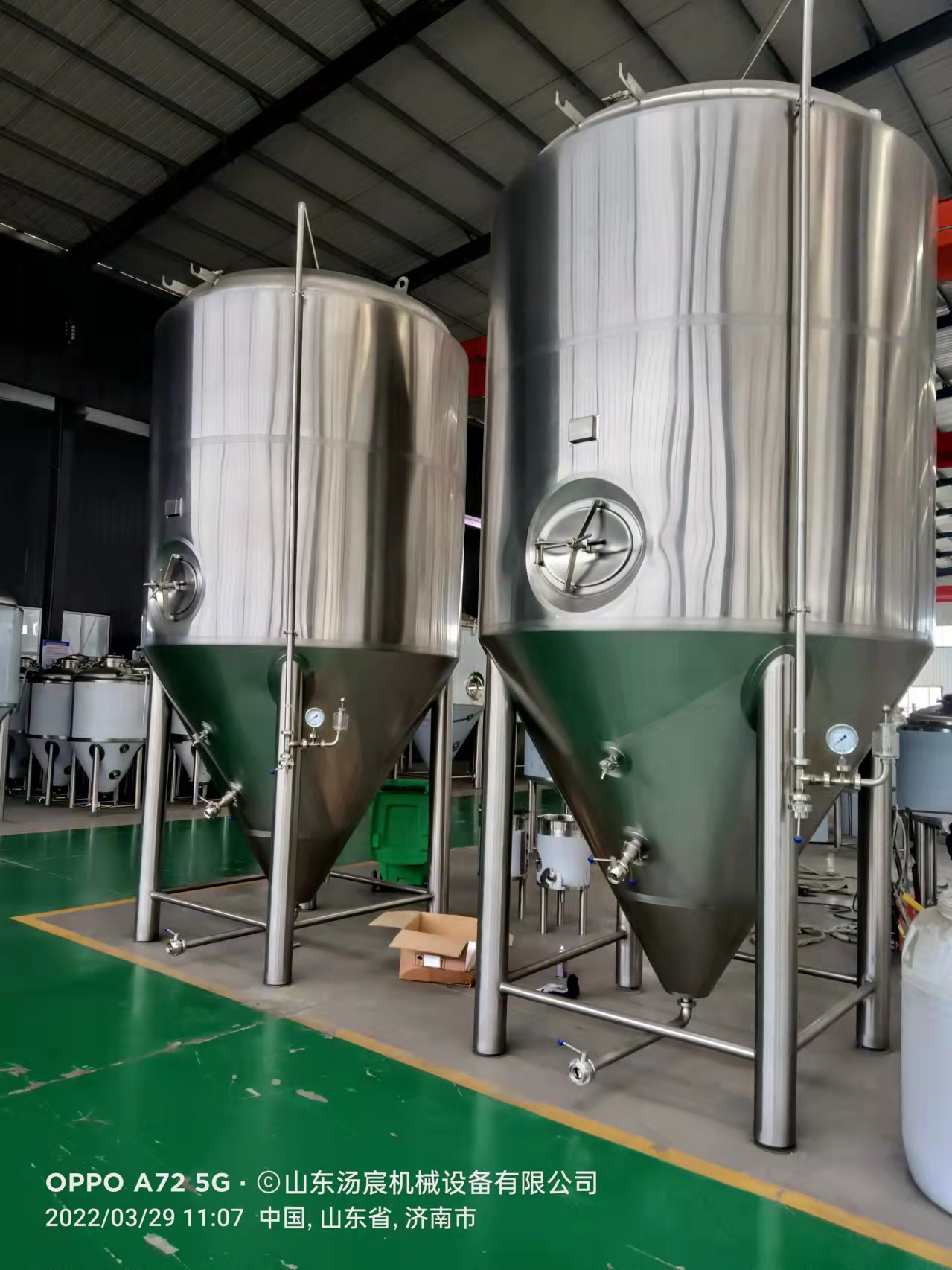
Fermentation Tanks
Fermenter is also called CCT (Cylindrical Conical Tank), FV (Fermentation Vessel), primary fermenter or unitank as they are used both for fermenting and storage. TONSEN stainless steel fermenter can be individually temperature controlled through glycol jackets and are fully equipped with accessories such as pressure relief valve, CIP cleaning ball, sample valve, manhole,etc Fermenting is the process during which the yeast transforms the wort into beer. Bright beer takes place after fermenting and mainly function is to make the beer more clear and store a longer time. The fermenter can be top manhole or side manhole according to different client requirement for lager or ale beer brewing.
Model: 2000L/20BBL
Thickness"Inner (SUS304)thickness: 3.0mm;
External-Jacket(SUS304) thickness: 2.0mm
Material: Stainless steel 304
Cooling way: Dimple jacket plate
Cleaning way: CIP in situ cleaning, with rotary spray cleaning ball
Insulation: Polyurethane-thickness:80~ 100mm
Accessories: Sample valve, Pressure gauge, Breath valve, Temperature gauge,
Top manhole, Washing ball, Butterfly valves, CIP Arm, Hop port, Discharge arm and so on
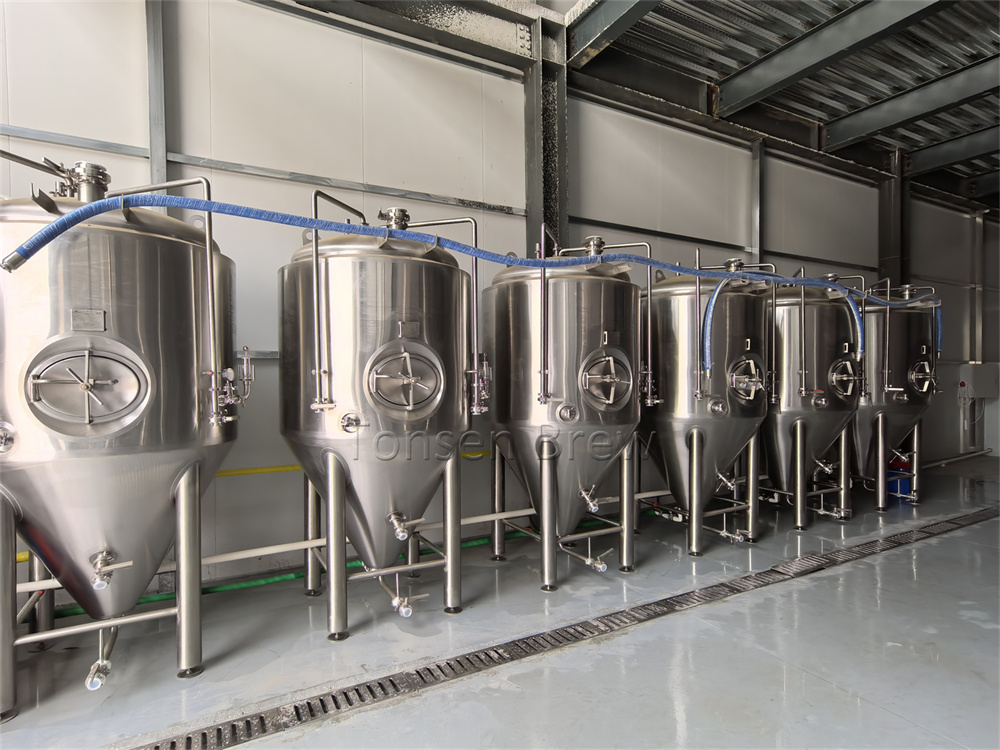
A fermentation system is a crucial component in the brewing process, where yeast converts sugars into alcohol and carbon dioxide, turning wort (the unfermented beer) into beer. Depending on the scale of the brewery and the specific process, fermentation systems can vary widely, but they all share common features aimed at controlling and optimizing the fermentation environment.
Here’s an overview of the key elements of a fermentation system:
1. Fermentation Tanks (FVs)
Shape and Design: Fermentation tanks come in different shapes—most commonly vertical or horizontal. Vertical fermenters are most widely used because they allow the yeast to rise and settle naturally.
Volume: The size can range from small (for pilot batches) to large (for commercial brewing), and the number of tanks will vary based on production volume.
Material: Stainless steel is the go-to material for fermenters because it's resistant to corrosion and easy to clean.
2. Temperature Control
Jacketed Tanks: Fermentation produces heat, so it’s essential to maintain an optimal fermentation temperature. Jacketed tanks (tanks with an external jacket that circulates cooling or heating fluid) are used to control the temperature.
Temperature Monitoring: Fermentation can get out of hand if the temperature isn't regulated, so most systems come with built-in temperature probes or control units to monitor the fermentation progress.
3. Oxygenation and Aeration
Oxygenation: Before fermentation begins, the wort needs to be oxygenated to help yeast grow. This is often done using an aeration stone or oxygen tank to infuse oxygen into the wort.
Aeration: After the wort is cooled and before adding yeast, brewers aerate it to give yeast the oxygen needed for healthy fermentation.
4. Yeast Management
Yeast Pitching: Yeast is typically added to the cooled wort to start fermentation. The amount and type of yeast used can significantly affect the beer’s flavor and characteristics.
Yeast Propagation: Some systems include yeast propagation vessels where yeast is cultured and expanded before pitching into the main fermenter.
5. Pressure Relief and Ventilation
Pressure Relief Valve (PRV): Fermentation creates CO2, which can build up pressure in the tank. PRVs allow excess gas to escape without damaging the vessel.
Blow-off Tubes: Some brewers use blow-off tubes connected to the fermenter to allow excess CO2 or krausen (foam from the yeast) to escape, especially during the first days of active fermentation.
6. Clarification and Maturation
After fermentation, the beer usually goes through a maturation phase in bright tanks (like horizontal or vertical bright tanks). This helps the beer clarify and settle before it’s packaged.
Secondary Fermentation: Some systems allow for secondary fermentation in a separate tank where additional yeast is added to enhance carbonation or flavor complexity.
7. Automation and Control Systems
Automated Systems: Many commercial breweries use automated fermentation control systems that track temperature, pH, and fermentation time, giving brewers real-time data to ensure consistency.
Monitoring: Some modern fermentation systems include sensors to detect alcohol content, pH, gravity, and other parameters to ensure the fermentation process stays on track.
8. Cleaning and Sanitization
CIP (Clean in Place): Fermentation tanks often come with CIP systems that allow for efficient cleaning without disassembling parts of the system. This is crucial for preventing contamination and maintaining the quality of the beer more.